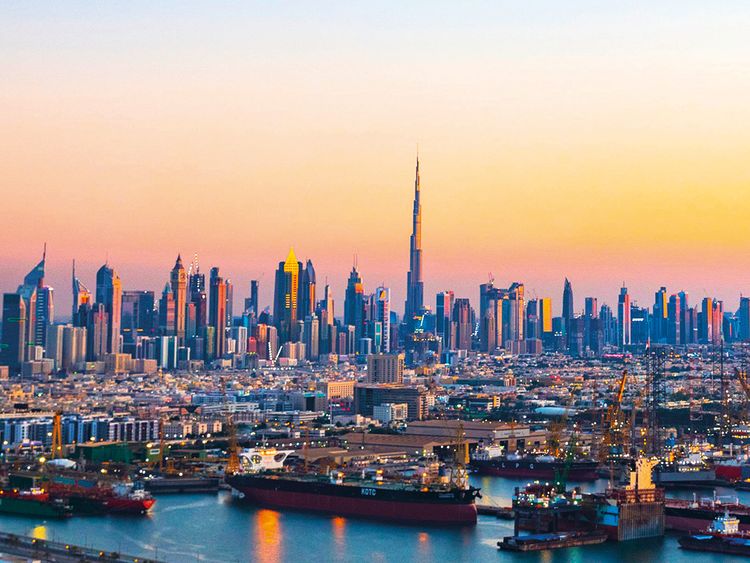
Dubai has finally eased its three-week, round-the-clock restrictions on the movement of people, announcing partial re-opening of businesses and the resumption of the metro.
The move sent a glimmer of hope to thousands of overseas Filipino workers (OFWs) and other expatriates, mostly in the hotel, malls as well as food and beverage sectors, who have been in limbo after the companies they worked in temporarily closed shop due to COVID-19.
“Hopefully,” said Consul General Paul Raymund Cortes, “the rebound of the economy will begin.”
“But,” he pointed out, “let us not be complacent with this silent enemy — the virus.”
Ericson Reyes, president the Filipino Social Club, an aggrupation of various Filipino groups in Dubai and the Northern Emirates, said they hail the move.
“The decision made by the authorities are based on statistical data and scientific projections supplied by reliable sources. In a way, it’s an effort to balance human lives and livelihood. That is why movements are somewhat relaxed, yet preventive measures are in place to ensure health and safety,” he said.
Josie Conlu, advisor of the Kalayaan 2020, another organization of Filipinos in Dubai, said it pays to heed the government’s call to proceed with caution.
“People should not be complacent and remain cautious,” she said.
Announcement
The announcement to relax the restrictions was announced Thursday, April 23, by the Supreme Committee of Crisis and Disaster Management (SCCDM) headed by His Highness Sheikh Mansour bin Mohammed bin Rashid Al Maktoum, in line with the decisions of the Ministry of Health and Prevention (MoHAP) and the National Emergency Crisis and Disaster Management Authority (NCEMA).
It takes effect starting today, April 24 – the start of the month-long Ramadan.
Careful assessment
The Dubai Media Office, tasked with disseminating government-related news in cooperation with local government agencies, citing SCCDM, said the move to reduce restrictions on movement in Dubai “follows a careful assessment of the current situation and analysis of reports from various authorities working to combat the pandemic.”
Underlining the emirate’s success in countering the spread of the virus, SCCDM said that stringent measures undertaken over the last three weeks have significantly helped to mitigate the crisis.
It added that the community’s compliance with restrictions on movement reflects its “strong spirit of shared responsibility” which was recently highlighted by HH Sheikh Mohammed bin Rashid Al Maktoum, Vice President and Prime Minister of the UAE and Ruler of Dubai.
As part of the first phase of easing of restrictions, individuals will be able to leave their homes between 6am and 10pm without a permit. The public is required to strictly follow precautionary measures which include maintaining physical distance from others as per guidelines and wearing a face mask. Those who do not wear a mask face a Dh1,000 fine.
Guidelines and salient points:
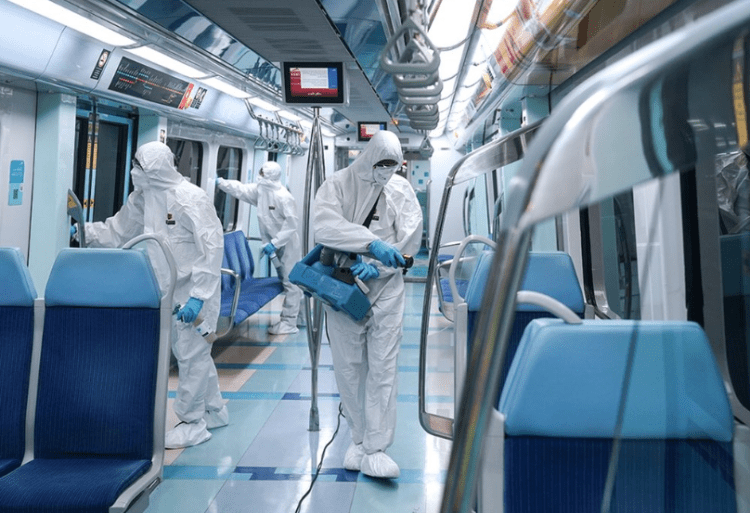
- Public transport (bus & metro), restaurants & cafes (except for buffet and shisha), retail sector (malls, high-street outlets and souqs), wholesale sector and maintenance shops will be allowed to operate under certain conditions.
- Family entertainment facilities, cinemas, changing rooms and prayer rooms will not be allowed to operate.
- Hotels will be allowed to operate but without opening pools, gyms, sauna and massage parlors.
- A maximum of 30% of the workforce of all organizations will be allowed to work from their offices while the rest will be required to work from home.
- Exercising outside will be allowed but only within the area of residence. Individuals must follow preventive measures including ensuring two-metre distance from other individuals and wearing face masks.
- Considering the advent of Ramadan and the social customs and traditions surrounding the Holy Month, members of the public are permitted to visit first and second degree relatives. Gatherings should be restricted to not more than five people. However, visiting high-risk individuals (individuals above 60 years and those with underlying medical conditions) should be avoided.
- It is prohibited to hold gatherings in public or private places.
Shopping Malls
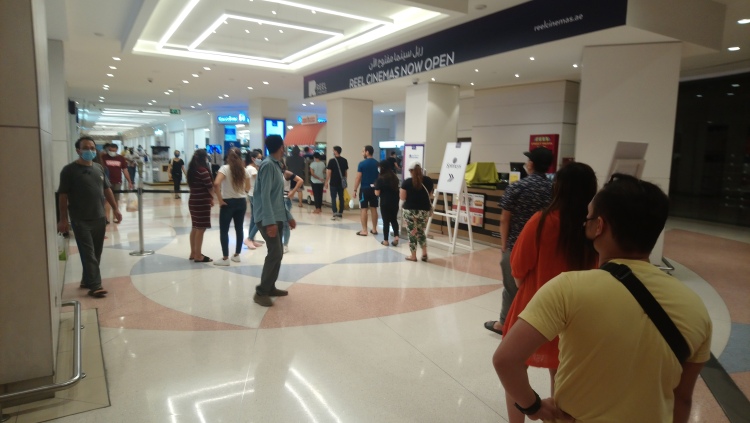
- Shopping malls, markets and commercial outlets will be open daily to the public from 12:00 pm to 10:00 pm. Furthermore, restaurants and shops are allowed to operate at a maximum of 30 percent capacity at the shopping malls.
- Malls and retail outlets are not allowed to hold entertainment events to avoid congestion and crowding.
- There will be no valet parking at malls and restaurants. The first hour of parking in shopping malls will be free.
- Only 25% of the parking spaces will be open to reduce overcrowding in malls.
- Sterilization operations will continue inside malls. Visitors will be subject to temperature checks at entrances and will be required to wear masks as a condition for entering a mall. Malls are also required to make sterilisers widely available to ensure the highest level of protection for visitors and workers.
- All shopping malls will have a medical isolation room for emergency purposes in case someone in the mall is suspected to be infected with the virus.
- Individuals above the age of 60 and children between three and 12 years of age will not be allowed to enter malls.
- Malls and outlets are encouraged to use smart and electronic payment methods and avoid the use of cash.
Restaurants
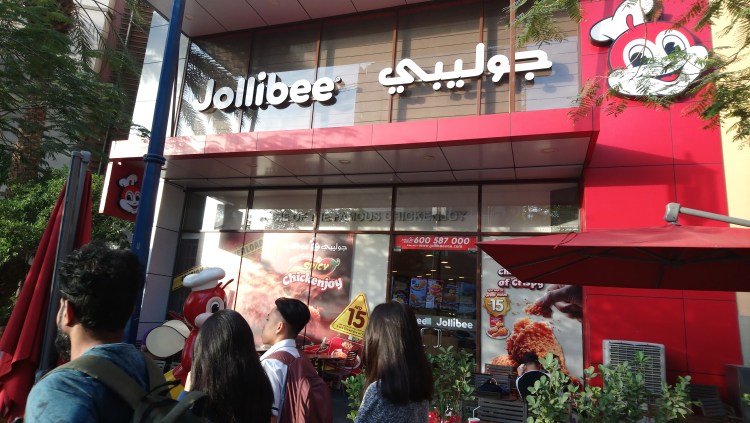
- Restaurants and cafés are allowed to operate normally but are not permitted to serve shisha and buffet. Dine-in customers are allowed but should occupy only a maximum of 30% of the outlet’s capacity.
- A two-metre physical distance should be strictly maintained between individuals. All diners and staff should wear masks.
- Only single-use cutlery can be used at restaurants and cafes.
- Restaurants are allowed to provide food delivery services between 10.00 pm and 6.00 am
- Services offered at salons for males and females will be restricted to hair and nail services. Customers can be received only by prior appointment and all preventive and health measures should be strictly observed.
Public Transport
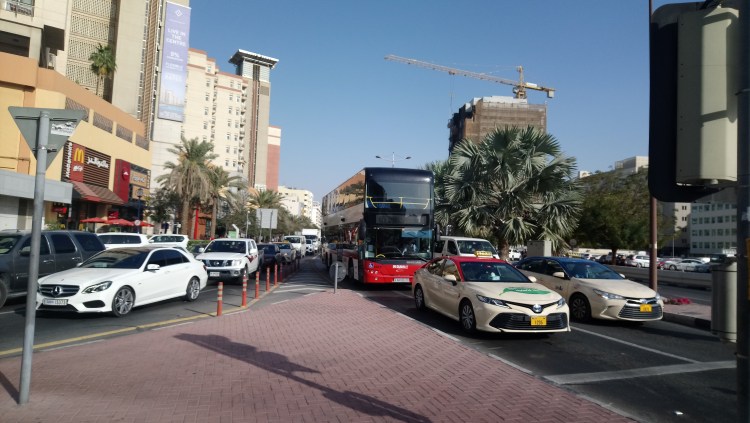
- Public transport services, including Dubai metro services, will be resumed from Sunday 26 April. The normal tariff system will be reintroduced. Precautionary measures will continue to be followed and there will be specific guidelines for passengers.
• Red and green line metro services will operate between 7.00 am and 11.00 pm.
• Preventive measures should be strictly followed by all passengers and staff in metros, taxis and buses and at public transport stations including maintaining physical distance and wearing face masks.
• Only two passengers are allowed in one taxi.
• Water transport, tram, limousine, and car sharing services will continue to be suspended.
Administrative offices for companies and institutions
• Employees are allowed to work in offices only if it is absolutely necessary. Their numbers should not exceed 30% of the total workforce. The rest of the workforce can continue working remotely from home. Companies should constantly monitor the number of employees and visitors entering and leaving the workplace every day.
• Meetings should be held at the office only if it is absolutely necessary. Attendees should not exceed five people and each person should maintain a two-metre physical distance from others.
• Daily sterilization of the workplace is mandatory and employees and visitors should be provided with sanitisers at all times. Everyone is required to wear face masks when at the workplace.
General guidelines
• Individuals are prohibited from distributing food except through mass distribution initiatives organised under the supervision of licensed charity organisations and relevant authorities.
• Individuals are advised not to share food with family members living in different homes. If food needs to be shared with relatives or friends living in the same area, it should be transported in sealed containers.
• Reopening of mosques has been postponed since close proximity between worshippers can pose risks of infection. Group prayers are not authorised to be held in public places and mosques. Group prayers and Taraweeh prayers are permitted at home but the worshippers must be from the same family, residing in the house.
• Individuals who step out of their homes for any purpose must wear a face mask and avoid touching any surfaces or their face. They must also use hand sanitisers and wash their hands with soap and water for at least 20 seconds.
• Seniors and people with chronic diseases or any illness are not allowed to leave the house and must avoid going to public places to ensure their safety.
• Domestic workers are prohibited from meeting anyone outside the home or receiving food from unknown sources. They should be provided with protective gear if they need to interact with people outside the house. They must also be guided on precautionary measures to be followed when receiving deliveries of parcels or goods (including disinfecting the packaging and using gloves).
COVID updates

Meantime, MoHAP has conducted over 29,000 additional COVID-19 tests among citizens and residents, resulting in the detection of 518 new cases among various nationalities, according to the Emirates News Agency (ENA).
The total number of cases in the UAE has now reached 8,756 of which some 1,637 have recovered and 56 have died, ENA said.
MoHAP said the UAE will continue to have increased COVID-19 tests of residents.
 The Daily Bread