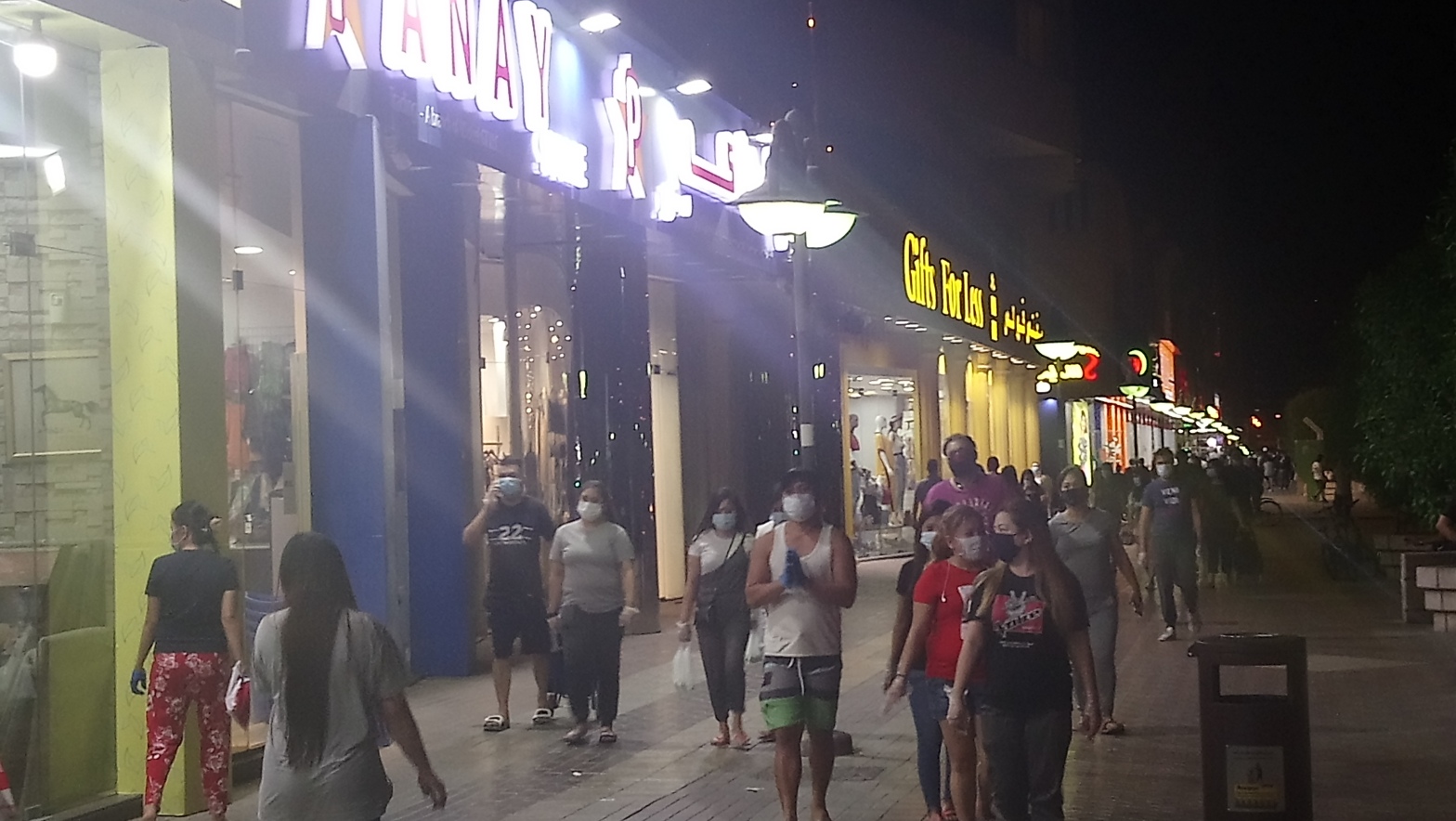
DUBAI, United Arab Emirates: The first half of May saw a spike in the number of deaths among Filipinos in Dubai due to the coronavirus pandemic – from 17 around the first week to 48 by May 21, during which the total deaths was at 233, according to Consul General Paul Raymund Cortes.

There are around 400,000 overseas Filipino workers (OFWs) in Dubai, according to Philippine Labor Secretary Silvestre Bello III. With this in the backdrop, the 48 deaths may seem to be a minuscule fraction, but that which nonetheless pokes interest as to why that many.

Speaking to Daily Bread, a ranking police official said at least four factors explain the jump in the number of deaths.
“The information that I got about it is the close community that we have here in Dubai. Satwa and other areas like Muteena are very, very high (in terms of Filipino population). So, in those areas, people living there have chances to live (together) like sharing. That is why (coronavirus) is very, very fast spreading,” the official said.
Another factor is that in most cases, COVID-19 positive Filipinos are rushed to the hospital only when it was already “very late.”
“Some of the cases came to the hospital very late,” he said.
“One of the cases that I was linked with in the past few days, the patient said she was very, very, sick. She came very, very late and she’s old. She was around 46.
“She said she thought that it was just maybe a cold or a fever ‘and I tried to fix it myself.’ But she couldn’t, that’s why she came to the hospital,” the police official said.
He said this has been a concern by authorities. “This is another problem. They only come (to seek medical help) after they have reached the last stage. That’s very dangerous,” he said.
“This is our recommendation: If you feel anything, you don’t solve it by yourself. Just ask (for help). This is a big problem. There is a high (big) community here (in Dubai) of Filipinos,” he said.
There has been at least one reported death where the deceased was revealed to have been having symptoms for two weeks before he was rushed to the hospital.

Melchor Corpuz Mandac, known for his consistent community volunteerism, passed away due to COVID-19 on May 12.
Sherwin Achivara, one of Mandac’s four nephews in Dubai, said they had no idea their uncle was dying.
“Nakikita lang naming sa FB nya, sinasabi nya, ‘Pagod lang ito,’” Achivara said. “Hindi naming alam na COVID na pala.”
Meanwhile, age, coupled with the fear of losing their jobs, were also a factor, the police official said.
“There are those in the age range of 45 or above 50. These is the age group advised not to go outside. But they do not leave their job. Maybe that’s how it was transferred to them. They refuse not to go out because they are afraid that their salary will be cut,” he said.
Meantime, other quarters said essential service workers — front liners, which include nurses — risking exposure to coronavirus in the conduct of their jobs, also factor in.
There was the case of a couple in Deira who were out working even during the 24-hour curfew, they said, because they were performing essential tasks.

Jade Jacqueline Chan-Delos Trinos, a regional sales manager at a company manufacturing diagnostic kits and supplies to labs and hospitals, and her husband, Den Bryan, who works at a company supplying hypermarts with food and other basic necessities, both tested positive for COVID. They survived the infection after having been under the care of the Dubai Health Authority (DHA).

According to the UAE Ministry of Health and Prevention (MoHAP), there were 32,532 COVID-19 cases across the country as of May 28. Total number of recoveries was 16,685 while total fatalities was 258.
No new Filipino deaths were recorded in the last week of May. The UAE is second home to people from about 200 countries across the world.
 The Daily Bread