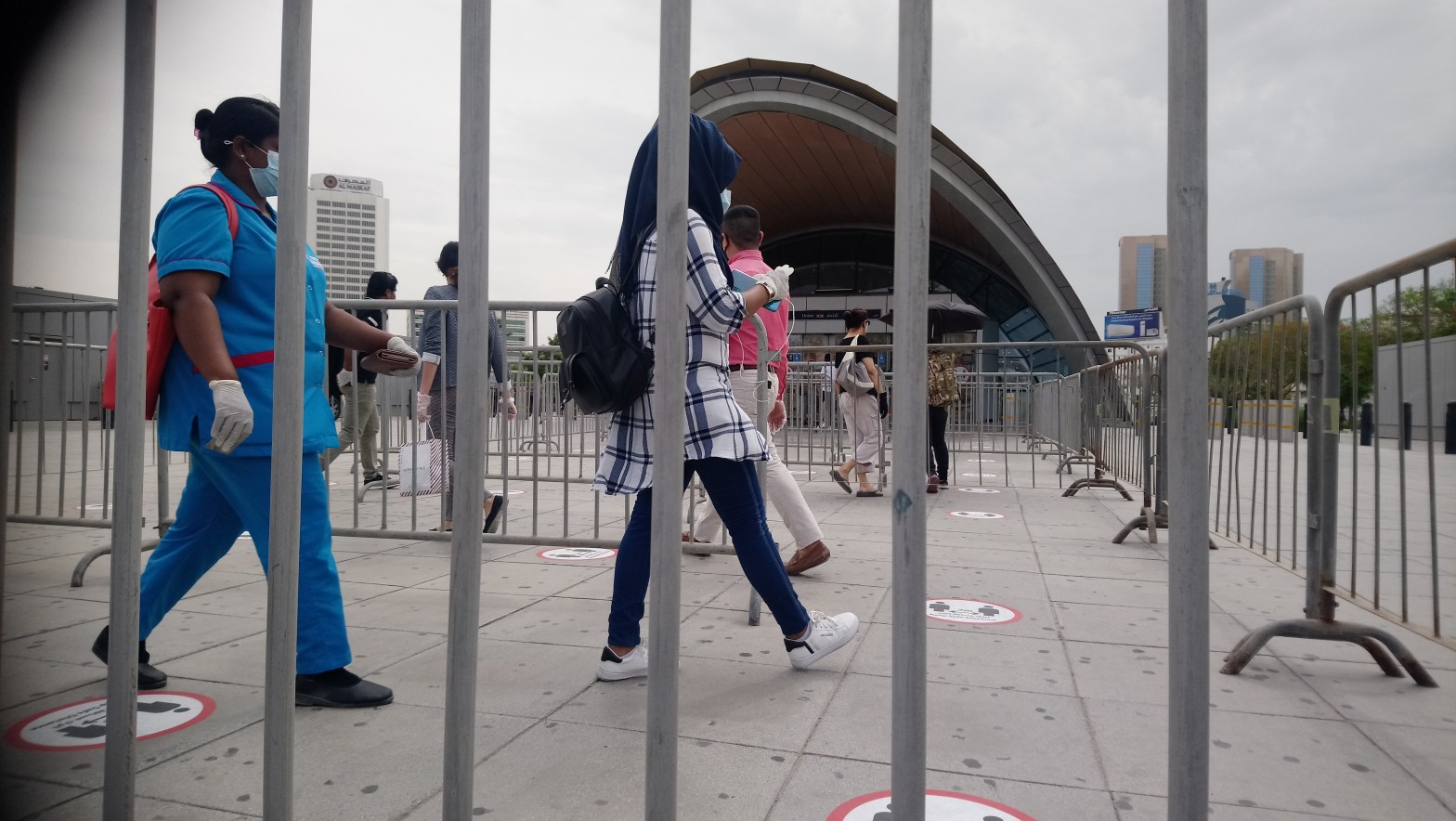
DUBAI, United Arab Emirates: From partitioned room to bed-sharing – this in a nutshell is the picture of how life has become for most jobless overseas Filipino workers (OFWs) stranded due to cancelled flights home.
Every day is the same grind but tweaked with a different twist, especially noting how their savings are slowly being used up to survive.
Such is the case for Nasrin Zara and Hughes Chavez, a couple who were among OFWs waiting for their turn to finally fly home.

“Mayroon naman kaming kaunting naitabi. Pero ngayon wala nang mai-uuwi. Dati nga kaming naka-partition, ngayon sharing bedspace na lang,” said Nasrin, who used to work at a mall shop.
Partitioned room is a big room subdivided into two or three smaller units to accommodate more tenants. Bedspace-sharing is having two people sleep together in one bunk bed to save on rent.
Rent for partitioned rooms in Dubai – the size of a car slot in a parking lot – starts at Dh1,200 (Ph16,200); while cheapest bedspace is at Dh650 (Ph8,700).
Nasrin’s husband, a bar and restaurant waiter has only been receiving 30% of his salary and has been on forced leave.
Indeed, there seemed no recourse for them but to call it quits and go home.
The couple, whose flight bookings have been cancelled twice by the airline as per advisory from the Inter-Agency task Force (IATF) citing quarantine conditions among other factors, were among over 88,600 OFWs across the UAE who have either lost their job, are on a no-work-no-pay set-up or have has their salaries adjusted due to COVID-19’s economic impact.
The Chavezes booked for a July 3 flight in May but it was cancelled and rescheduled for Aug. 4. They are staying in Karama, a workingclass enclave in Dubai.
Depressed
Another couple, Joe Dexter and Maria Socorro Montante said many of those lying in wait for their flights have been getting depressed.

“Kumakapit lang kami sa prayers,” Socorro, who worked at a car rental shop, said.
According to her husband, Joe Dexter, their flight, which was booked in June has been moved to Aug. 4 as well.
Joe Dexter’s residency visa has been cancelled and he only has till July 23 to legally stay. Hence, he faces fines of Dh200 on the first day of overstaying and Dh100 for the subsequent days, according to immigration policies.
“Hindi lahat can afford to stay longer,” said Maria Socorro.
“Sa food, marami naming mga nagbibigay ng libre pero yung tirahan ay problema. There are OFWs na nadi-depress na sa kakahintay ditto. Hindi na naming alam kung saan kami lulugar.
“Sana matuloy na kami nitong August kasi kung hindi, wala nang matitira, pati yung binigay ng kumpanya (gratuity) magagamit,” said Maria Socorro.
She said other fellow OFWs had their families back home send them money for their plane tickets. “Ipinangutang ng mga kamag-anak nila a Pilipinas para may pamasahe,” she said.
The Montantes were from Bacolod.
The stranded OFWs’ airline – Philippine Airlines – has explained that there have been very limited flights with only about four in July.

Agnes Pagaduan, PAL country manager – UAE, said they are hoping there’d be more in August.
Cebu Pacific has also resumed its Manila-Dubai-Manila route.
Data on the number of OFWs heavily impacted by COVID-19 measures was based on applications with the Philippine Overseas Labor Office (POLO) in Dubai for the Department of Labor and Employment’s Abot Kamay ang Pagtulong (DOLE-AKAP) program, which provides for a one-time financial assistance of AED730 (P10,000)
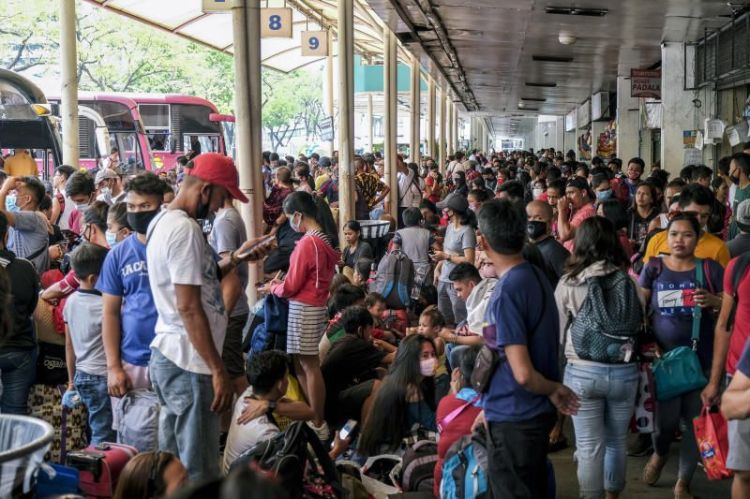
Robie Torre-Gonzales, Dubai president of the Filipino Human Resources Practitioners Association in the UAE or FilHR, citing POLO information, said approximately 53,160 or 60% of the 88,600 AKAP applicants are in a no-work-no-pay situation; 26,580 or 30% are those who have been terminated; and the remaining 10% are those whose salaries have been reduced and unfortunately are not covered by the program.

The OFWs have been under such conditions as early as March when measures were put in place and several establishments, including hotels and bars and restaurants, had to temporarily cease operations.
 The Daily Bread