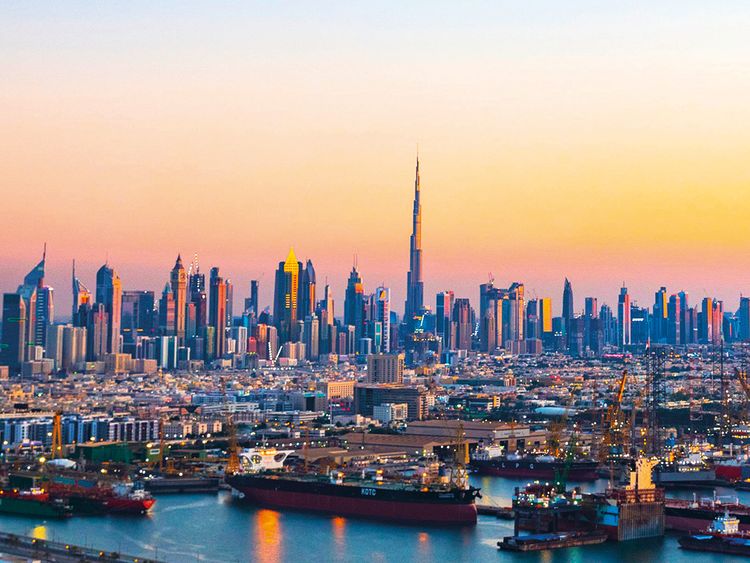
DUBAI, United Arab Emirates (UAE) – Filipinos in the United Arab Emirates (UAE) are ecstatic over the peace deal signed last week with Israel, especially noting a provision allowing direct flights that will now make it easier for them to travel to the Holy Land – which tops their bucket list.
This developed as Philippine Ambassador to Israel, Nathaniel “Neal” Imperial, in an email interview with Rappler from Dubai, expressed hope the historic event would finally lead the way for a lasting peace in the region and open the doors for Filipinos in UAE and Bahrain, which is also a signatory to the pact, to realize their life-long dreams of seeing the places mentioned in the Bible.
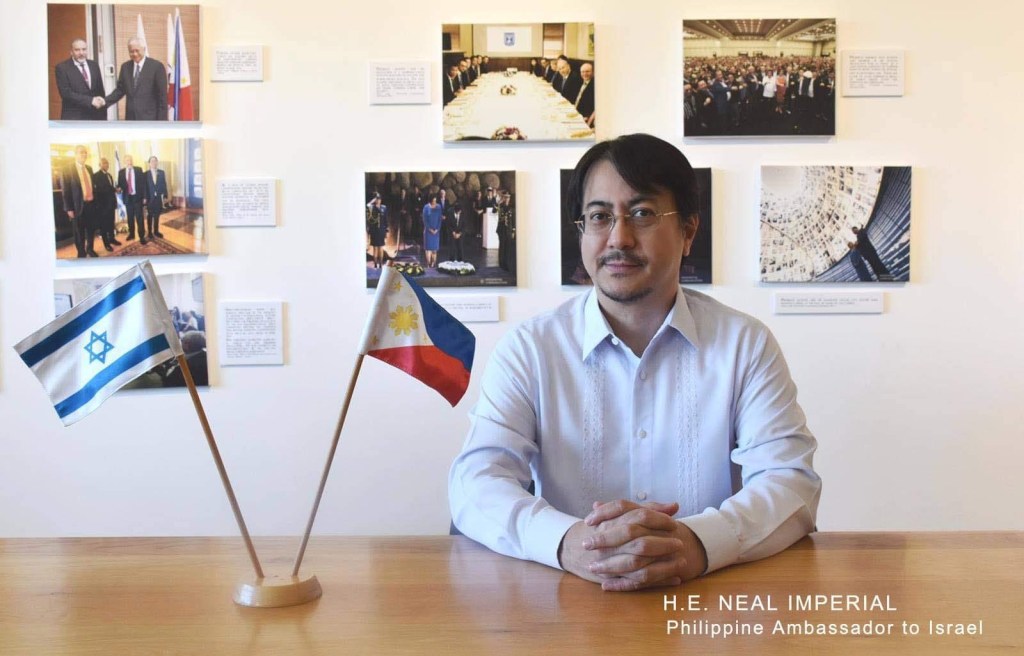
“The Philippine Embassy in Israel welcomes the normalization of ties between Israel and the United Arab Emirates, and between Israel and the Kingdom of Bahrain, respectively. The embassy hopes that the signing of the accords between Israel and the two Gulf states will lead to greater peace and security in the Middle East,” said Imperial, who assumed his post on Dec. 10, 2014.
He added: “It is also our hope that the establishment of diplomatic ties between Israel and the two Gulf states will pave the way for the almost 800,000 Filipinos in UAE and Bahrain to visit the Holy Land for pilgrimage in the near future.”
Back in the day when the peace agreement, “Abraham Accord,” named after the father of Christianity, Islam, and Judaism, has yet to even be formulated, Filipinos wanting to go the Holy Land would need to fly to Jordan or Egypt and take a risky bus ride, approximately for six hours, through possible flashpoints and borders into Israel.
Walk where Jesus walked
Among those rejoicing was Dr. Rex Venard Bacarra, digital faculty consultant at McGraw Hill and professor of philosophy and the humanities at The American College of Dubai, who said it has always been in his bucket list to see Israel.
“Being able to walk on the paths where Jesus walked, or go to the places he stayed at, meditated, prayed, and wandered about is really emotionally affecting to me as a person of faith,” Bacarra said. “There is really something sacred, something divine to the idea of spiritually walking beside Jesus.”
“Pangarap ko makapunta sa Israel talaga at nasa bucket list ko ‘yan,” said Allan Castro, graphic designer. “Biruin mo, yung binabasa kong Bible, once nasa Israel ako para akong nag-time travel dahil malalakaran ko ang mga tinapakan ng Panginoong Hesus at ni Haring David.”
“The stories we read in the Bible and in religious story books will indeed be supported by actual facts as we visit those religious places in Israel,” for his part, said Joel Hualde, former president of the Filipino Nurses Association in the Emirates (FNAE) and current adviser of the group.
“Matagal na pong nasa bucket list namin na puntahan ang Israel. We will definitely plan to visit Israel with our children as soon as the travel situation , so they’ll see the roots of the stories that they were told about the chosen people and of Jesus Christ,” said Lou Olvido Parroco, life coach.
The tour
Joanne Rico, head of marketing and sales at an Abu Dhabi-headquartered healthcare chain who had been to Israel in 2013, recalls her experience: “Super higpit nila. Bawal camera. My bus seatmate took photos secretly while we were waiting at the border. Nakita pa rin sya ng camera at pinababa sa bus, kinuha ang phone, pinabura. There were armed people at the border.”

Rico, who flew to Jordan and took a bus to Israel along with fellow Filipinos and other nationalities, added: “Sabi nga ng aming priest-turned-tour guide, it is not safe for us to cross borders. Because if suddenly one country wages war, we will not be able to cross at all. Hence, we can not go back to Amman, Jordan where our flight back to UAE is.”
These borders were in contested Palestinian areas and include the West Bank, which divides Israel and Jordan; and the Gaza Strip bordering Israel and Egypt.
Rico said they wasted no time reliving Christ’s days.
“We swam in the Dead Sea; went to River Jordan where Jesus was baptized; went for a boat ride in and ate seafood from the Sea of Galilee, where Jesus cooked food for the apostles after resurrection; went to the Mount of Beatitudes where it is believed Jesus gave the Sermon on the Mount,” Rico said.
She said they also visited the site where Jesus was born; walked the steps he took while carrying the cross; visited the place where he was crucified, and the place where Mary, carrying Jesus in her womb, visited Elizabeth, which is also known as The Visitation – the rosary’s Second Joyful Mystery – and as mentioned in the Gospel of Luke.
Rico said she spent AED5,000 for an eight-days-seven-nights tour, all inclusive.
This early, meanwhile, Dubai-based travel and tour agencies have been clearing their desks to roll out Israel package deals.
“Of course, sama na yan sa tour packages naming for additional income,” said Malou Prado, CEO of MPQ Travel & Tourism.
Sid Rivera, Al Qadi Tourism marketing manager, for his part said the peace agreement has a big potential for the travel industry. “Especially ngayon na limited lang ang mga services na ino-offer ng mga agencies kasi hindi pa pwede ang international tours and visa assistance for Japan and China among others.
“Also, nagbago ang requirements ng visa application dito sa UAE. Mas marami nang requirements. Dati passport and picture para sa mga nasa labas na papasok dito,” he added.
90-day visa free stay
Filipinos enjoy a 90-day visa-free stay in Israel, a policy apparently arising from a move by then Philippine President President Manuel L. Quezon, who welcomed up to 2,000 Jewish refugees fleeing Nazi Europe when the Second World War broke out, according to the United Nations High Commissioner for Refugees (UNHCR).
“This act of kindness from a nation on the other side of the world did not go unnoticed by Israel. Since 1969, Israel has granted visa-free travel to Filipinos in recognition of the Asian nation’s diplomacy,” Go Israel, an official government tourism site, stated.
Consequently, bilateral relations between the Philippines and Israel was born in 1958 through the Treaty of Friendship.
History of the peace accord
The Abraham Accord was officially signed at the White House in Washington D.C. on Sept. 15 by US President Trump, who presided over the ceremony, with Prime Minister Benjamin Netanyahu of Israel and the foreign ministers of Bahrain and the UAE present.
The agreement is hoped to help finally bring an end to the Arab-Israeli conflict, which takes its roots from the 1947 United Nations Resolution 181 dividing Palestine into Jewish and Arab states and which resulted to the birth of Israel in 1948.
Prior to the partitioning, Palestine, an Arab country, was part of the Ottoman Empire, which conceded the territory to the British by virtue of a mandate by the League of Nations at the end of the First World War in 1918. That mandate was terminated in May 1948 as per UN Resolution 181.
 The Daily Bread