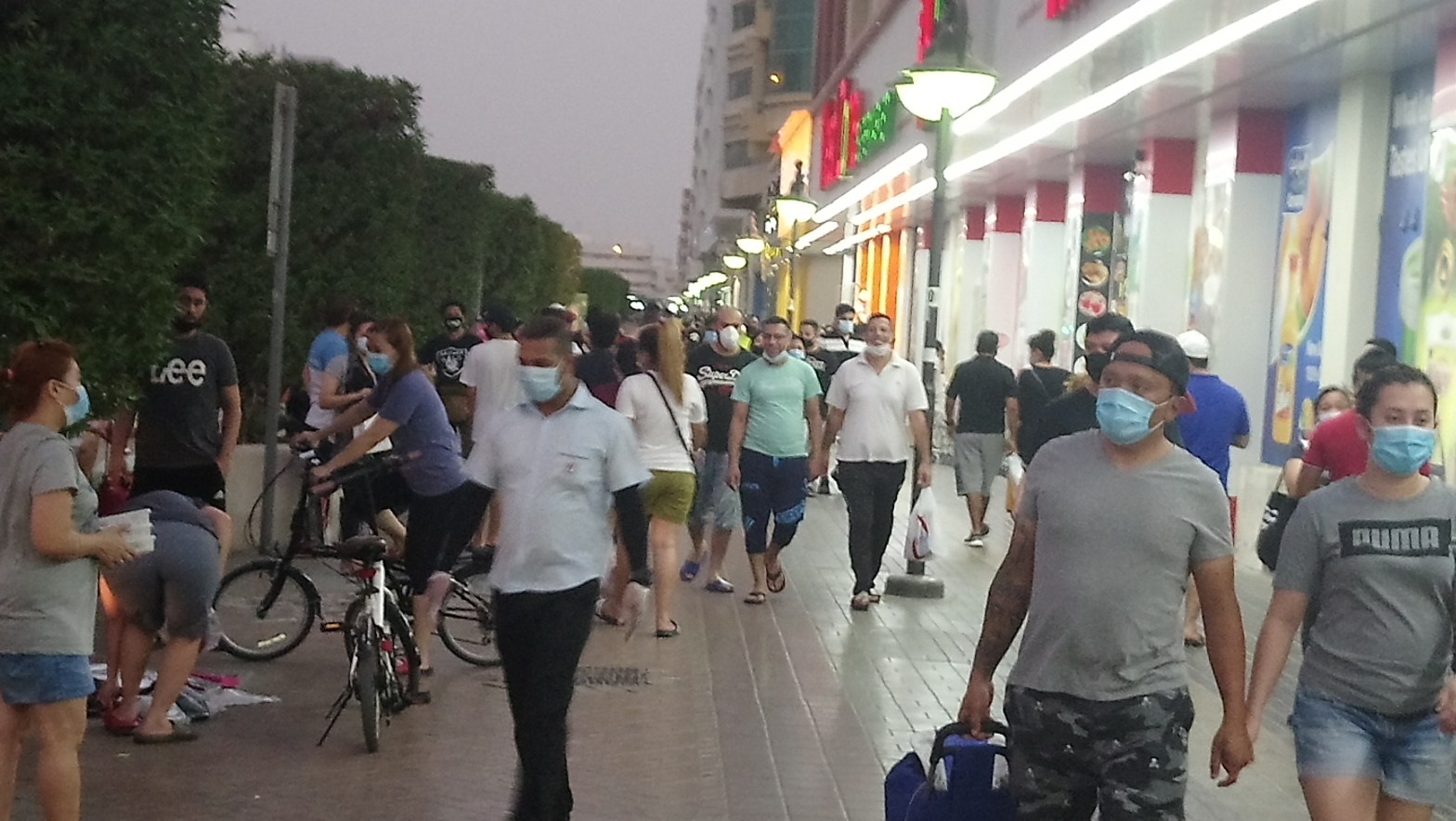
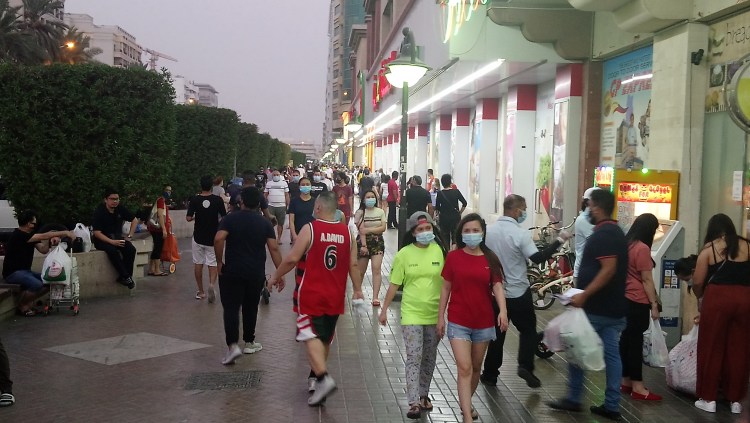
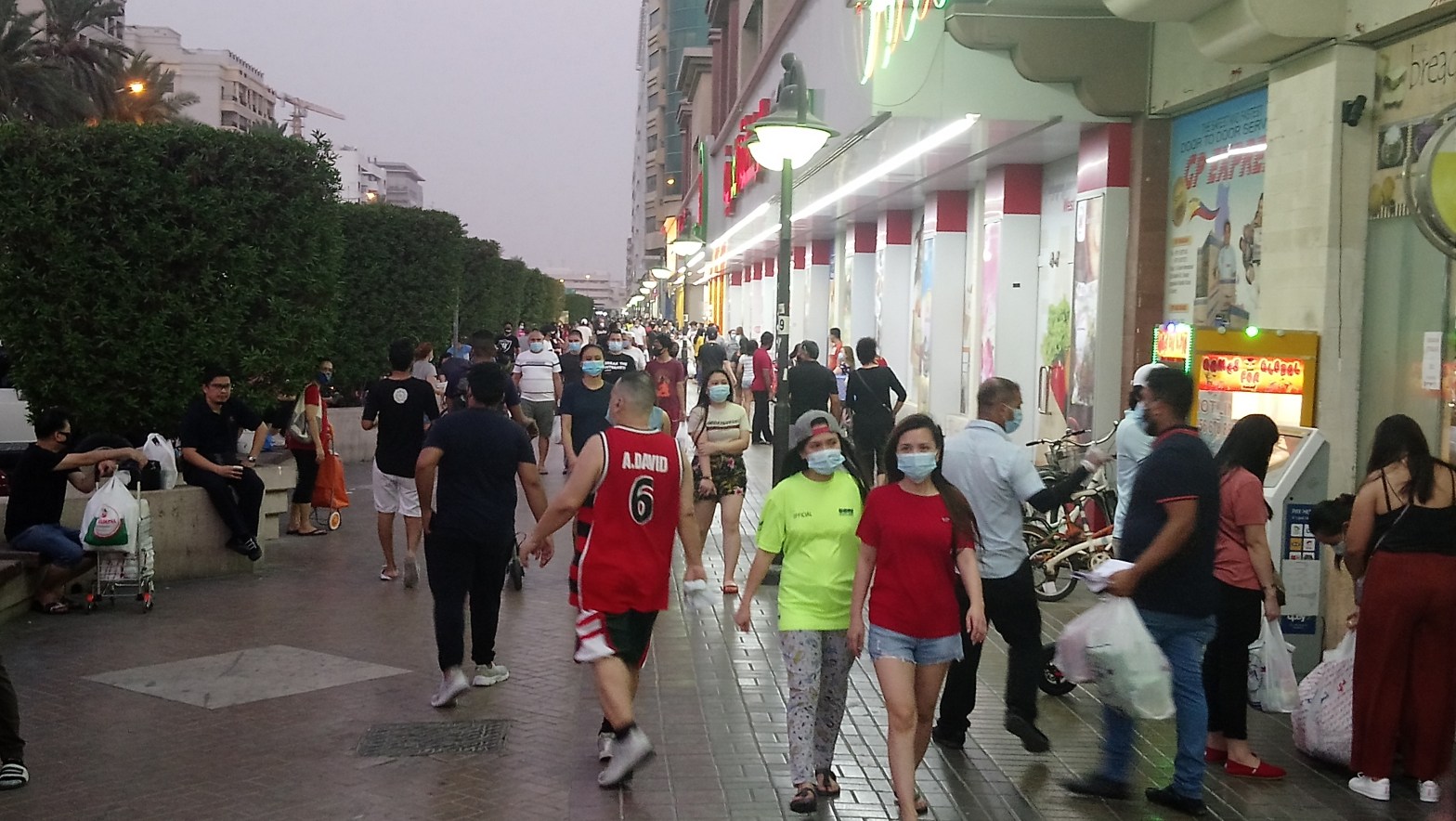
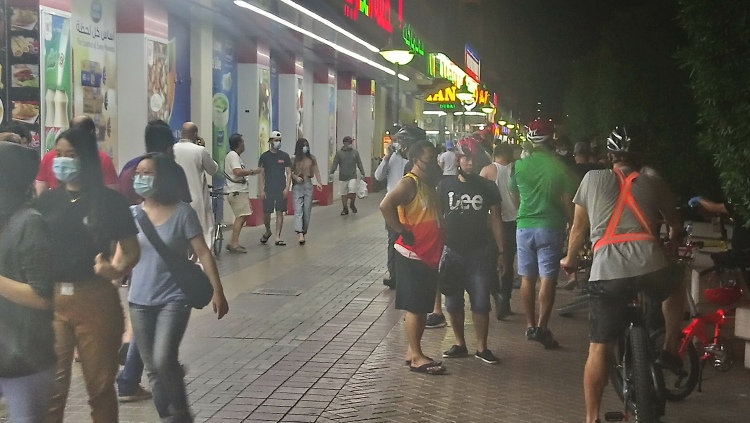
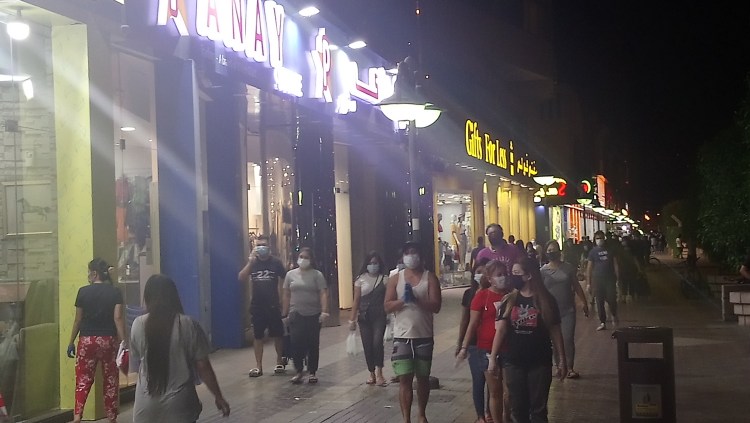
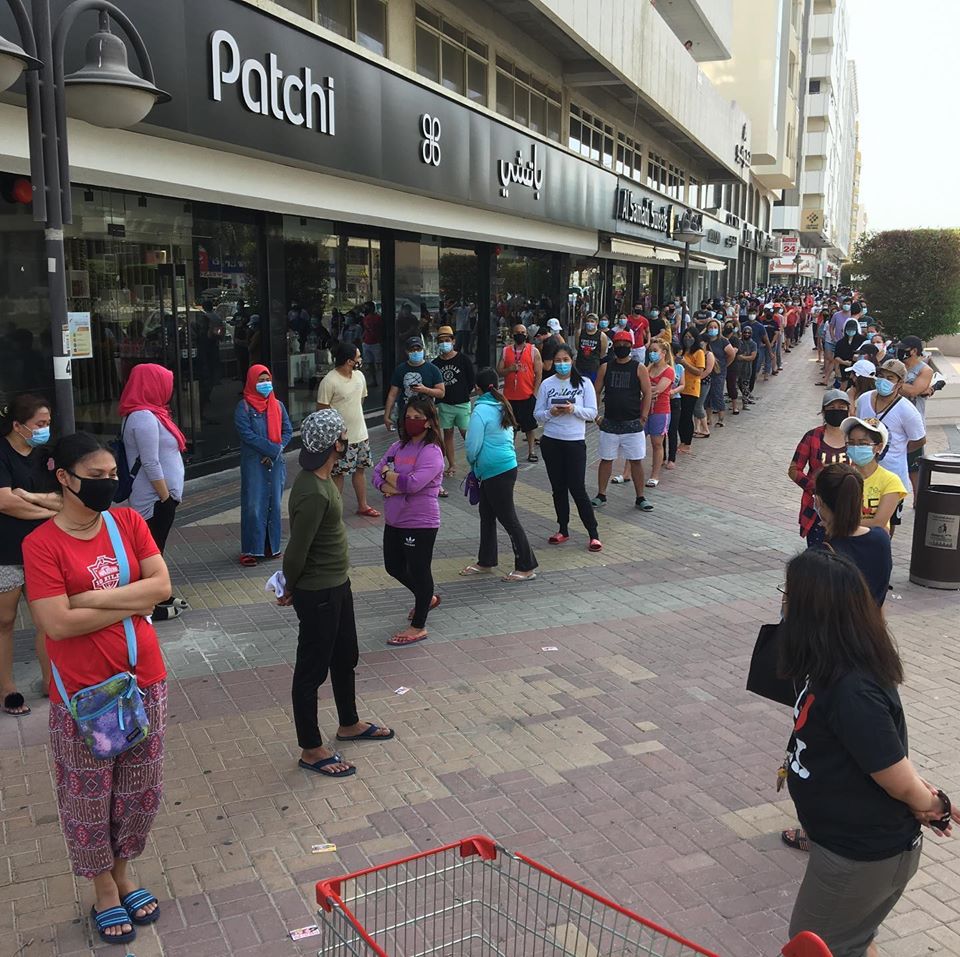
From the all-time Pinoy homegrown favorite Ice Candy to dried fish, the stretch of supermarket row in Muraqqabat has transformed into an informal street market of sort where Overseas Filipino Workers (OFWs) affected by the economic impact of the COVID-19 pandemic have resorted to peddling, saying they have no choice but to risk it to make little money for the rent and food.
They get full support from fellow OFWs who buy their stuff despite not really needing them, among whom include Victoria Saleza, office employee in Business Bay who lives in the area.
“Suporta ko na lang sa kanila yan. Mabuti nang ganyan, marangal na nabubuhay kaysa maka-isip ng hindi tama. Lamang ay bawal ang kanilang ginagawa dahil walang permit from authorities,” Saleza said.
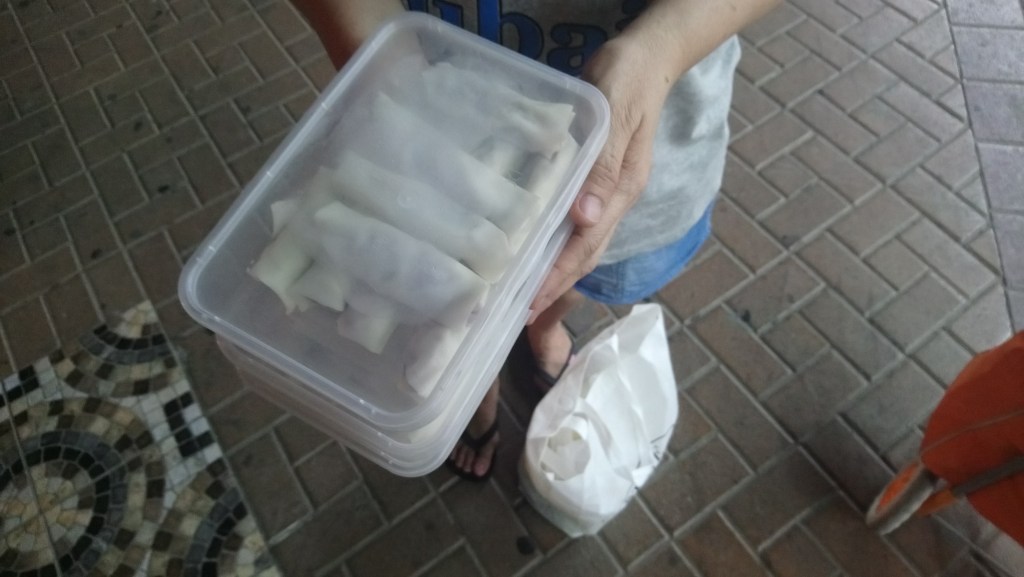
Antonina Jose (Not her real name), a domestic help, herself sells lumpiang shanghai (beef dim sum wrap). She said she has resorted to peddling because her employer left for India and has not returned yet.
“Hindi pa bumabalik yung amo ko,” Jose said, adding that she needs money to pay for her bedspace.
Like most peddlers, Jose blends herself into the crowd and asks shoppers coming out from the supermarkets if they have spare money to include her lumpia.
“Nakakabenta naman,” she said. Her dim sum wrap sells for Dh7 – seven pieces in a pack.
There are approximately 88,600 OFWs in Dubai and the neighboring northern emirates who have either lost their jobs, are on a no-work-no-pay arrangement or have had their salaries adjusted by as much as 50% because of the pandemic, according to the consulate’s Philippine Overseas Labor Office (POLO).
Over 53,100 of them are on a no-work-no-pay arrangement; and 26,580 are jobless. Hundreds have gone home while several hundreds more, who have booked tickets, have remained stranded because of flight cancellations at Philippine airports mainly for lack of place to put returning OFWs on 14-day quarantine.
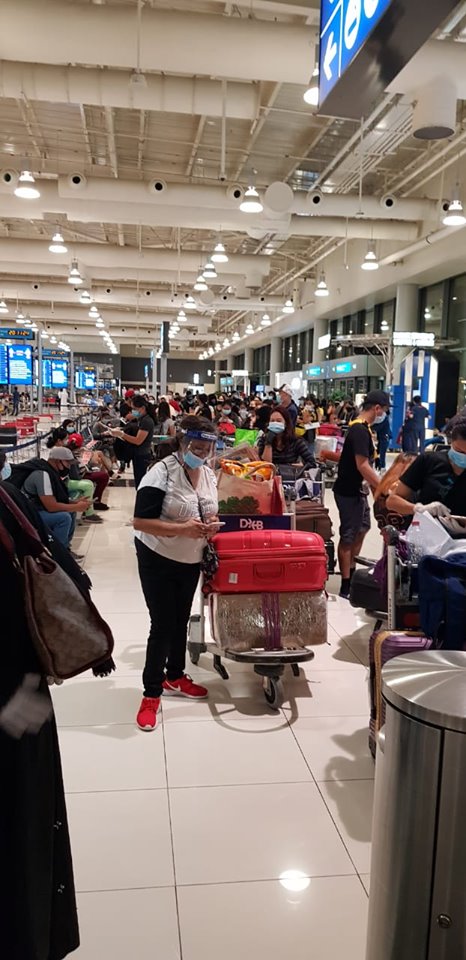
ABU DHABI, United Arab Emirates: A group of over 200 overseas Filipino workers (OFWs) in the UAE, stranded in the past several weeks due to canceled flights bookings have sought help from Foreign Affairs Secretary Teodoro “Teddy Boy” Locsin, Jr. to address their situation.
The group, UAE Stranded OFWs, has tagged Locsin in a tweet saying, “Considering our situation, hindi na po kaya. All our lines will be cut off, evicted na din po kami sa bahay nmin. Please help us.”
The OFWs’ original flights were scheduled for next month but have been canceled until further notice by the Philippine government.
The group’s spokesperson, Georgia Nagaño Galimba, said there were many among their 208 members (and counting) who are now in dire straits and running on empty.
“Marami po kaming mga nakaka-usap na members namin sa group na kinakailangan nang umalis sa mga bahay nila, maka-cut na ang electricity, water and wifi. Higit sa lahat, wala na pong pang-gastos even sa food,” she said.
Galimba said that on average, flight bookings have been cancelled for up to three or four times with update intervals for re-booking taking up to about a month.
“We’re asking po on behalf of all stranded OFWs here in UAE, na please accommodate us. Bigyan nyo po kami ng flights approval para sa aming airlines. A day of extended stay here costs lot. Hindi na po namin hiningi na tulungan kami financially, kami na po bumili ng sarili naming tickets, ang gusto lang po namin ay makauwi sa Pilipinas,” Galimba said.
Another member said there were expectant mothers and senior citizens among the stranded OFWs.
Sandy Gomez (not her real name), a member, said they have tried talking to the different agencies in the Philippines but we were allegedly only given the runaround.
She said they have tried appealing to the Philippine Embassy in Abu Dhabi but to no avail as they were told that flight approvals was beyond their jurisdiction.
Photo courtesy of Philippine News Agency (PNA)
“Tinanong po namin ang Ninoy Aquino International Airport (NAIA), hindi daw po sa kanila, sa Department of Foreign Affairs (DFA) daw po. Tinanong po namin sa DFA, sabi po ay sa embassy sa bansa, (na) ang sabi ay Civil Aviation Authority of the Philippines (CAAP) naman daw po ang responsible,” Gomez said.
She said she and the group’s members booked tickets on their own, “kasi kung ia-asa lang po sa repatriation by Philippine Embassy or Consulate ay baka po sa 2021 na kami maka-uwi lahat.”
Priority
A ranking Foreign Affairs official said Philippine embassies in top OFW-destination countries like the UAE have been requesting CAAP, with help from the DFA home office in Manila, to grant more flight approvals for Manila, Clark and other Philippine airports.
“Therefore, for the past weeks there have been a number of flights approved and the airlines are able to accommodate the rebookings of these cancelled flights,” the official said.
“Due to COVID, the allocation of number of allowed flights from all over the worlds is limited. But UAE is being given priority due to the requests of the embassy (there) and DFA. (But) still the backlog is huge,” the official added.
Galimba meantime said most of the bookings were made in May and first week of June.
The Facebook group was formed on June 22, 2020 as a clearing platform for those waiting for updates about their bookings. The group and soon was listing 208 members two days later.
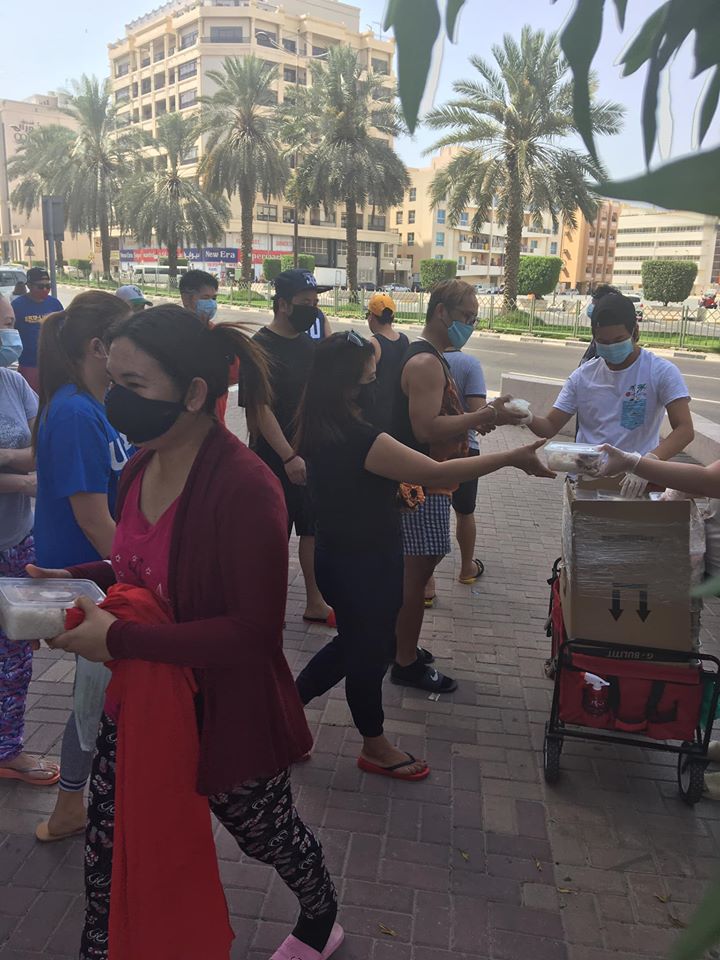
OFWs affected by the pandemic’s economic impact queuing for free hot meals in this file photo.
Bookings were made with Philippine Airlines, Cebu Pacific, Emirates Airlines and Turkish Airlines with the bulk of the flights originally scheduled for July but have been cancelled until further notice from the Philippine government, organizers said.
“We formed the group so everyone can be calibrated on the information from the airlines because more often than not, they get different answers to the same questions (which only creates confusion). It also eases the mode of communication in cases where there were sudden changes like flight approvals,” Galimba said.
Domestic helps, sales employees, laborers and office administrative staff comprise the membership. Around 30% of the 208 were those terminated from work; 40% were those on no-work-no-pay arrangement; and the remaining 30% were worried about the state of the UAE’s economy, said Galimba.
She said they are concerned about bills. “Umaandar po ang mga bayarin, pero ang salary nag-stop. Magpapatong-patong lang po ang mga utang kapag magstay pa kami dito,” Galimba said.
DUBAI: Noodles, because they come in long strands, help prolong life, (“Ang pansit ay pampahaba ng buhay”).
Apparently, taking their cue from this popular Pinoy adage, two Overseas Filipino Workers (OFWs) decided to celebrate their June birthdays handing out free pancit noodles and chicken food packs to the jobless instead of partying.
“Ang pancit ay pampahaba ng buhay kaya’t pansit kayo riyan.” Rosaline Baylosis and her close friend, Angelo Catolico, with their team handing out the food package to celebrate their birthdays. (Contributed photo)
In their early 30s, Rosaline Baylosis and her close friend, Angelo Catolico, said they’d like to give more meaning and relevance to the special occasion in these days of the pandemic by helping out those in need.
“For the past two years, we’ve been celebrating our birthdays together since it falls in the last week of June. Usually, we would hold parties with friends and acquaintances. But due to pandemic, we have decided to give away food packages to other people, especially those in need,” said Baylosis, administrative officer at a construction company whose birthday was on June 28.
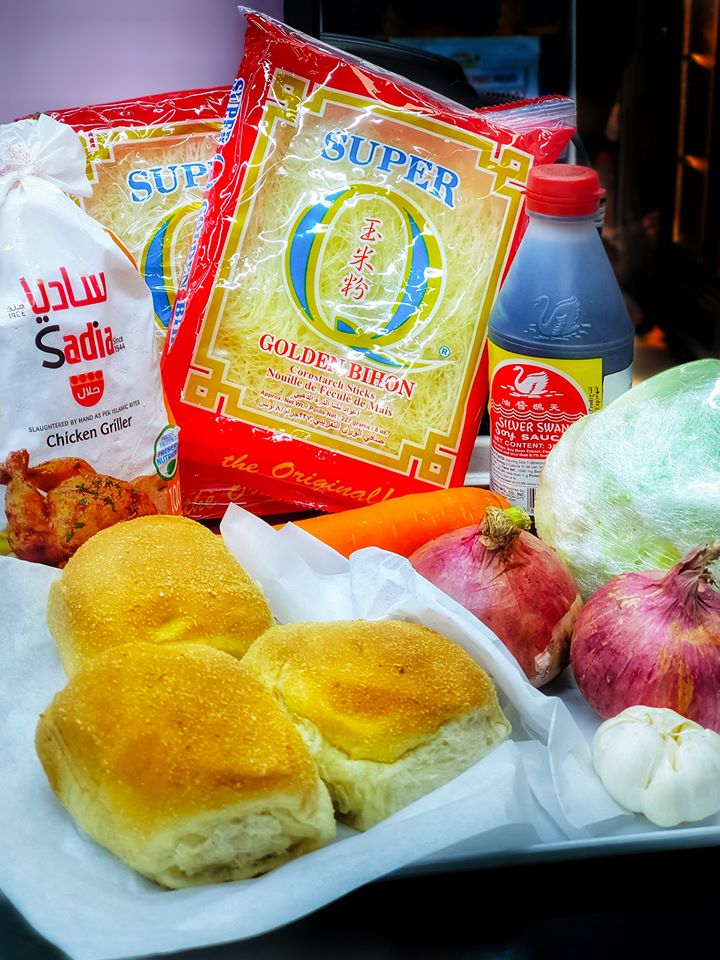
The package consists of basic ingredients for pancit bihon matched with chicken. (Contributed photo)
Dubbed, “Pancit for Long Life” from that popular Filipino saying, the package consists of basic ingredients for pancit bihon matched with chicken, “which is a star in every Filipino’s birthday,” said Baylosis, who also is an award-winning photographer.
The two’s efforts were complimented by management of a grocery store in Rigga, which sold the food packages to Baylosis and her friends on discounted price.
“They helped us arrange the food packages and the manager, Mr. Mahesh, was generous enough to give us discount for our purchases,” said Baylosis.
She said she and her friends were planning to do the relief drive again but with coordination with Dubai government agencies which regulate events like this to ensure safety and order.
“I was planning to do it again maybe after the next salary comes or if there would be an additional fund source, of course. All of the expenses in the birthday food drive were paid for through our own pocket. If we could have other sources for provisions to be distributed then that would be great,” said Baylosis.
Rosaline Baylosis and her close friend, Angelo Catolico. (Contributed photo)
“Also, I felt that it’s a must nowadays to extend help to others even if you don’t have that much. Until now, I am receiving a lot of messages from fellow kababayans asking for help and it breaks my heart to learn about their dire situation. I will try to have other means to help them as well as soon as possible,” she added.
Catolico, who turned 33 on June 26, is a customer care specialist by day and a musician during his free time.
There approximately are over 53,100 OFWs who are on a no-work-no-pay arrangement with their employers while another 26,500 have been terminated, according to the Philippine Overseas Labor Office (POLO) in Dubai.
There are 400,000 documented OFWs in Dubai, according to Labor Secretary Silvestre Bello III.
Duringthese trying times when most Overseas Filipino Workers (OFWs) are opting to go home than continue battling the odds, there remain those who for apparent sheer lack of a better choice, have decided to take their chances.
Among them is 35-year-old Cheryl Esteban Patalud of Malatana Tampakan, South Cotabato, who had been in the hole since the COVID pandemic started bearing down on Dubai around March is indeed one inspiring story worth an MMK episode.
Patalud was terminated from work, evicted from the flat, threatened by her new landlord with being thrown out for missing on the rent, had steaming coffee on rice for lunch, and, owing to her mestiza appeal, was even egged on by her flat mates to get a man so she can move out of her miseries.
She hanged on and finally got a job as a receptionist at a business tower on Sheikh Zayed Road.
‘Pinalayas ako’
“Pinalayas ako. Ang gamit ko andun pa, ayaw pa ibigay kasi wala pa akong pambayad,” said Patalud, single mother of three, whose father, she lamented, has lately been seeing another woman, even bringing her to their home and posting the whole thing on social media “kasi kulang daw lagi pinapadala ko” for the kids.
Patalud used to stay in a flat in Al Rigga, a largely Filipino enclave north of Dubai, where she had been staying at before she lost her job. After being thrown out, she moved to Satwa, a densely populated residential area, where things became even worse for her.
A Political Science undergrad, Patalud, who worked as restaurant staff in Dubai, had asked for food relief from the consulate but she got tired waiting because the staff unfortunately were having all hands on deck attending to various concerns, among them, labor issues, repatriations, and a backlogged financial assistance program.
She also applied for that program, which gives Dh700 to qualified OFWs, but her request was rejected due to technicalities – the termination letter read that she was fired due to redundancy, not COVID-19.
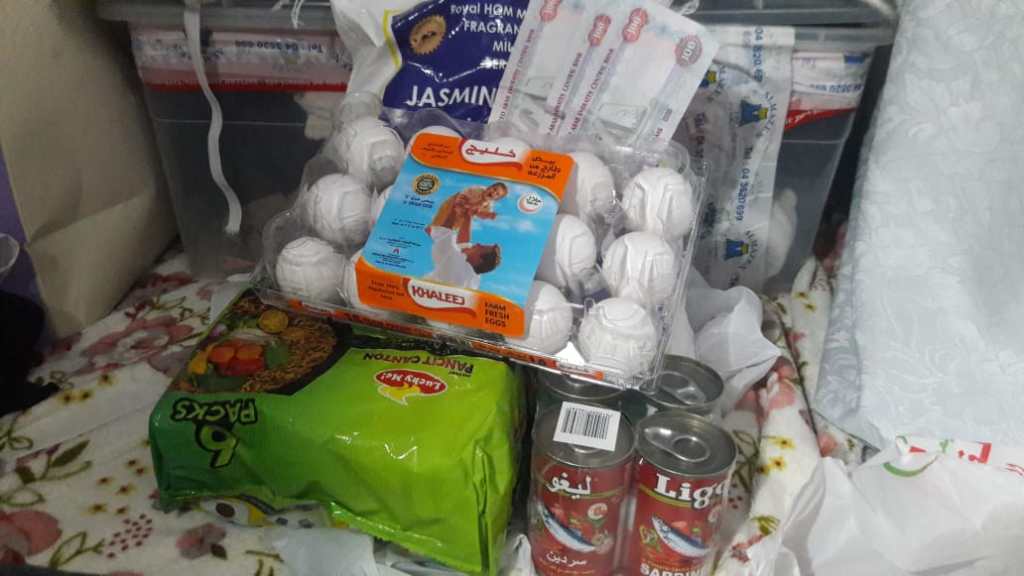
Free groceries from Good Samaritan OFWs. (Contributed photo)
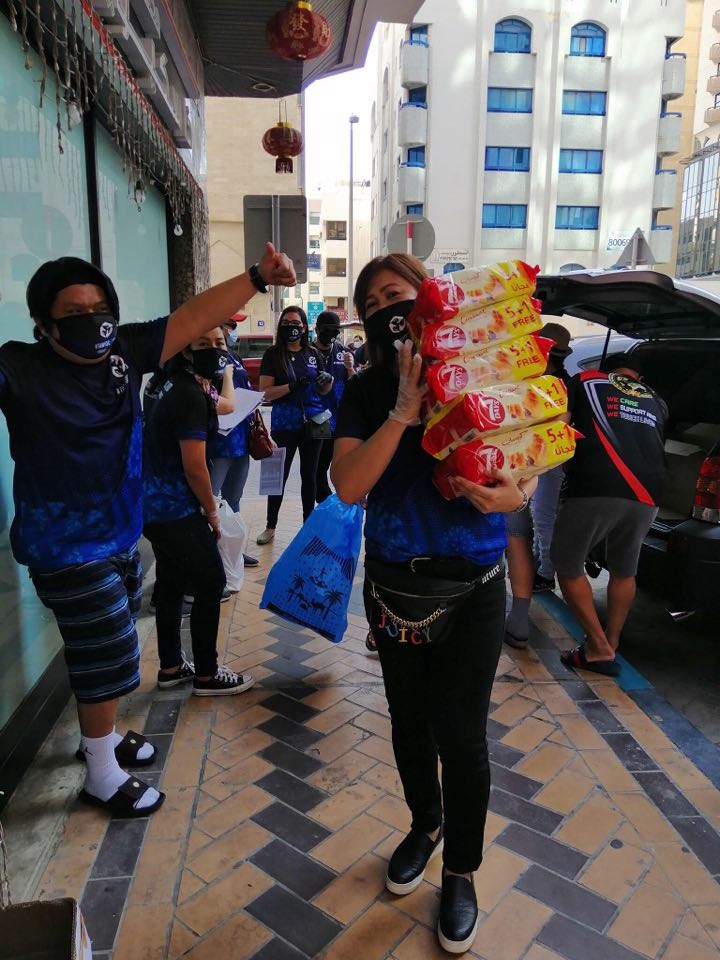
Patalud has been able to get free groceries from a civic group and a concerned fellow OFW paying it forward, among them the Filipino Social Club or Filsoc under Ericson P. Reyes’ leadership and Good Samaritan OFWs like Toff Ydeo.
‘Tinutulog ko na lang ang gutom ko’
Cheryl Esteban Patalud of Malatana Tampakan, South Cotabato at her bunk bed in Satwa. (Contributed photo)
For all her woes, Patalud said: “Tinutulog ko na lang ang gutom. Kung anu-ano na naiisip ko minsan. Nakakapagod na talaga. Sobrang bigat na kasi. Para na akong sasabog.”
“Madalas, nagmumukmok na lang ako sa higaan ko. Minsan, feeling ko mababaliw na ako; naisip kong tapusin ang buhay ko, kung hindi ko lang nilalawakan ang pag-iisip ko,” she said.
Patalud said she could not go home yet.
“Hindi pa pwede. May sakit sina mama at papa ko. Kailangan ko pa ring mag baka-sakali. Walang pambili na maintenance na gamot magulang ko. Gusto ko ring mag-college ang mga anak ko,” she said. Her eldest is 13, a boy; the youngest, a girl, is eight.
“Gusto ko nang umuwi, kaso pag umuwi ako, hindi ko alam kung saan ako kukuha ng panggastos,” she added.
Adding to her heart-wrenching story is the seeming indifference of her flat mates. “Kumakain nga ako sa harap nila, kape ulam ko tapos sa kanila adobo. ‘Hindi ka nagluluto?’ sabi lang nila. (Minsan) sabi nila mag-jowa (boyfriend) daw ako, kasi sila daw, yung mga jowa nila binibigyan sila. Walang maayos na payo,” Patalud added.
Answered prayers
God one day answered her prayers and her application for a job as receptionist was approved. But there was a problem: She could not go to work because she did not have money for the bus ride. “One dirham lang ang pera ko at yung Nol card (used to ride the metro and the bus) na hiniram ko, walang laman,” she said.
Patalud nonetheless managed and is now regularly reporting for work. She got a Dh500 cash advance that she turned over to her landlord to cover for part of her rent.
She has been busy with work these days.
Cheryl Esteban Patalud at work. (Contributed photo)
“Nakakaraos na ng kaunti,” she told Daily Bread. “Nakalipat na din po ako. Nasa partition na po, hindi na sa bedspace.”
An aging engineer, afflicted with a medical condition that has caused him to lose eye sight, is now in a quandary over a bank loan that has totaled Dh150,000 with accrued interest.
Seventy-one-year-old Eduardo Malinao Cervantes, who hails from Quezon province, has also been longing to go home but could not as yet due to a travel ban imposed on him pending resolution of the case.
Cervantes has served more than a year’s jail time in connection with the criminal and civil cases arising from the unpaid debt.
Cervantes, who lives in shared accommodation in Abu Hail, has diabetes that has worsened and caused glaucoma. He also has cataract.
“Nuong nakaraang week, tuluyan na akong hindi makakita,” said Cervantes. “Inaalalayan na lang ko ng mga kasamahan ko dito s abahay sa pagkain at paglalakad,” he added.
Cervantes said the Philippine Consulate’s Assistance to Nationals (ATN) section has been working on his case, appealing that the travel ban imposed on him be lifted on humanitarian grounds. His passport is with the Dubai Court.
Eduardo Malinao Cervantes (Contributed photo)
“Natulungan naman nila ako kaya lang nagkaruon ng problema kasi kailangan kong maibigay yung amount na hinihingi ng banko through a collection agency,” he said.
Marco Flores, ATN case officer, said they have referred Cervantes’ case to the Department of Foreign Affairs’ Office of the Undersecretary for Migrant Workers’ Affairs (DFA-OUMWA) in Manila.
“Hindi pa sya makaka-uwi po since may travel ban po sya which is aware naman din po si Tatay,” Flores said.
Cervantes said he applied for a Dh70,000 loan from a private bank in Dubai to consolidate his credit card debts in 2008. He said he had up to five credit cards.
“Nagawa ko lang mangutang ng malakihan sa banko kasi may mga credit cards ako na gusto ko nang isara,” said Cervantes.
He became delinquent with his payments around 2009 which consequently caused interests to pile up, prompting the bank to seek the services of a collection agency to go after him. Cervantes lost his job in the same year as he was not able to renew his residency visa because of the debt case.
A criminal case was filed against him in December of that year to which he served a month-long jail time in January of 2010.
In mid-2011, a civil case was filed for which he went to jail for more than a year. He learned that a travel ban has been imposed on him when he got out of prison in 2012.
Cervantes said he managed to save money in the Philippines when he was still gainfully employed. “Kaya lang naubos na kasi hindi na ako nakapagpapadala dahil nagbabayad ng utang at wala nang trabaho,” he said.
Through the years being jobless, Cervantes’ older sister, who lives in the United States, sent financial help. “Yung food and housing were through his friends,” said Gracie May Kalaw, who is among those providing support for Cervantes.
It was in 1983 when Cervantes joined the Filipino diaspora, arriving in Saudi Arabia to work as communications engineer. In 2003, he was transferred by the company to Dubai for a project.
Failure to meet credit card obligations is among problems besetting overseas Filipino workers (OFWs) in the UAE. Asked how many credit card problems does the consulate have on its desk, Flores said: “Marami po. Hindi na po namin mabilang.”
Atty. Barney Almazar, an OFW advocate and director at Dubai-based Gulf Law Consultancy, said a major legal concern in the UAE is police and civil cases from unpaid loans.
“This month, we have about 200 inquiries and requests for assistance to settle their loan obligations. The best solution is to negotiate with the banks taking into consideration both their personal circumstances and central bank regulations to strengthen their bargaining position. We can also use humanitarian grounds to get some concessions,” he said.
DUBAI, United Arab Emirates: A breast cancer survivor, who has a mild pneumonia she developed following 16 sessions of chemotherapy, has succeeded in dealing with another threat in her life, this time, COVID-19.
Forty-six-year-old Brenda R. Fondevilla, donut store manager from Digos, Davao del Sur, said she first tested positive on June 10 but subsequent tests on June 12 and 16 came out negative.
She needed two consecutive negative COVID-19 test results to be declared free of the disease. Health workers were wary that her underlying condition – pneumonia – might complicate the situation and so they put her on close watch.
“Meron daw akong konting issue with pneumonia na long-term side effect ng chemo,” said Fondevilla, mother of two kids – the eldest being a 15-year-old boy who was just a baby when she left for UAE in 2005.
“Hindi ako natakot. Galing nga akong cancer. Wala naman akong nararamdamang kakaiba,” Fondevilla said.
Jennifer Tolentino Trinidad (Contributed photo)
Her COVID-19 ordeal started when a house mate, Jennifer Tolentino Trinidad, a sales lady, tested positive twice.
Trinidad had just started reporting back for work when restrictions were lifted and shops started to re-open around May 4 when she got infected, she said.
“Bago kami nagbukas, pina-test kami ng management for COVID-19 kasi yun un po ang patakaran ng Abu Dhabi Municipality,” Trinidad said. She said she tested negative during the first round; but the second subsequent test came out positive.
She said she could not be sure whether she got it at the shop or from commuting to work. “Hindi ko lang sure kasi nagba-bus din ako papasok sa work and taxi pag-uwi,” she said.
She again tested positive but later on also got her two negative results.
There were four occupants in the house including Fondevilla and Trinidad. The two others tested negative as well.
Brenda R. Fondevilla (Contributed photo)
Fondevilla said she and the two other occupants immediately went for a COVID test upon learning about Trinidad. She and Trinidad were on a 14-day home self-isolation as of press time.
Fondevilla said she was diagnosed with breast cancer in 2012 and went under the knife in November of the same year. In 2013, she started undergoing chemotherapy in 16 sessions and 25 radiation sessions, she said.
Fondevilla, who arrived in UAE in 2005 on a visit visa and now works in Al Ain, has no immediate family in the UAE. Her husband is a former overseas Filipino worker (OFW) in Dubai, who now rides a tricycle for a living back home.
DUBAI, United Arab Emirates – Some 71,585 overseas Filipino workers (OFWs) who have applied for financial aid from the Philippine Overseas Labor Office (POLO) in Dubai may not be able to get the money because funds currently available are only for 17,000 yet total applicants was at 88,585 as of June 19.
This was learned from Labor Attaché Felicitas Bay who said 34,083 applications have been evaluated and 14,949 have been approved, so far. “Funding allocation is for 17,000 OFWs only,” the labor official said.
Labor Attaché Felicitas Bay
As of Friday, June 19, AKAP cash aid has been given to 10,997 OFWs, according to Bay.
“The guidelines only cover terminated and no-work-no-pay workers,” she said.
OFWs whose salaries were slashed and those on reduced work week with pay are not covered by AKAP. Those in the UAE on a visit visa are not included as well, according to Bay.
It was not immediately known whether the Department of Labor and Employment (DOLE) in Manila would be able to appropriate more funds considering that there are, according to Labor Secretary Silvestre Bello III, himself, 400,000 documented OFWs in Dubai with almost 100,000 of them having been impacted by COVID-19’s economic consequences.
Meantime, citing POLO figures, Robie Torre Gonzales, Dubai president of the Filipino Human Resources Practitioners’ Association in the UAE (FilHR), said around 53,160 or 60% of the AKAP applicants are in a no-work-no-pay situation; 26,580 or 30% were terminated; and the remaining 10% are those whose salaries have been reduced.
The UAE government allowed salary reductions through a ministerial resolution which was issued on March 26 for companies to survive the pandemic’s economic impact.
Robie Torre Gonzales, Dubai president of the Filipino Human Resources Practitioners’ Association in the UAE (FilHR
“The job market is really bad. Ang daming nawalan ng work, at kung ‘di nawalan ng work, wala namang pay kasi sarado pa ang office kasi ‘di essential or vital ang industry or the job itself (A lot lost their jobs, and if they didn’t, they don’t have any pay because offices or industries deemed non-essential are closed),” said Gonzales.
DUBAI, United Arab Emirates: The Supreme Committee on Crisis and Disaster Management (SCCDM) headed by Sheikh Mansour bin Mohammed bin Rashid Al Maktoum has announced the following guidelines for foreign nationals with Dubai-issued residency visas in coming back to the emirate.
The new protocols, announced by the Dubai Media Office on Sunday, June 21, allow Dubai residency visa holders to return to the emirate starting Monday, June 22.
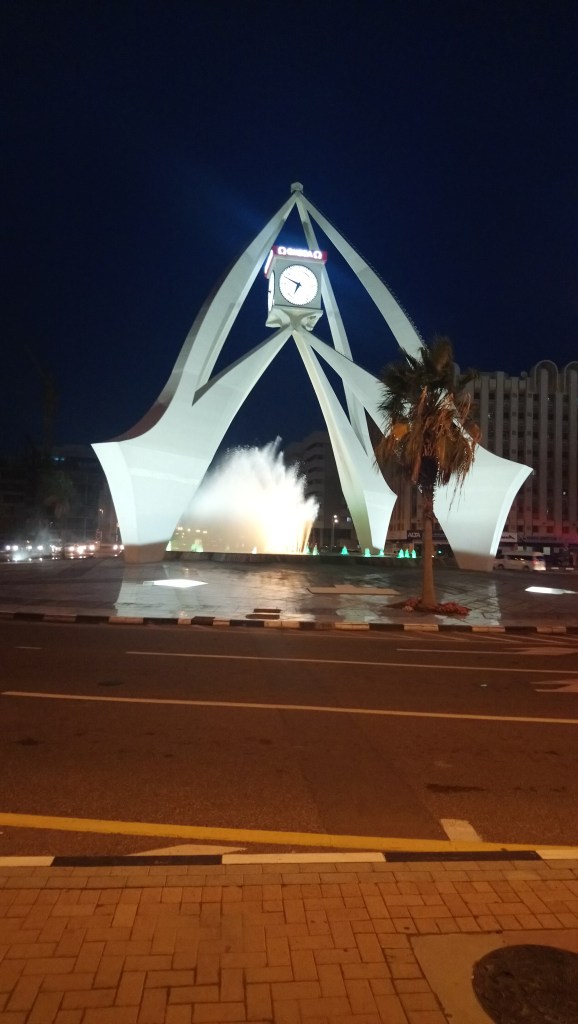
The Clock Tower in Deira, a Dubai landmark. (Jojo Dass)
The guidelines set the following steps:
Returning foreign nationals with Dubai-issued residency visas need to coordinate with the General Directorate of Residency and Foreigners Affairs (GDRFA Dubai) and the airline they have pre-booked their flight with, to obtain prior approval for their return to the city.
They will also need to fill up a Health Declaration Form confirming they do not have COVID-19 symptoms with the airline allowed to refuse boarding if the passenger exhibits any.
Upon arrival at Dubai airports, returning resident visa holders will have to undergo a polymerise chain reaction (PCR) test for COVID-19.
They should also register their complete details in the COVID-19 Dubai smart app available online on arrival at the airport.
Returning residents arriving in Dubai should not leave their house until they have received their COVID-19 test result. They will be required to self-isolate themselves at home for 14 days should they test positive.
Residents staying in shared accommodations or living in high-density housing facilities need to be isolated at an institutional facility if they test positive. The resident’s employer should make arrangements for the isolation facility in accordance with guidelines approved by the COVID-19 Command and Control Centre or bear the costs of a paid isolation facility provided by the government.
The Supreme Committee has also moved to allow citizens and residents to travel to any foreign country starting Tuesday, June 23 provided the destination countries agree to receive them. Furthermore, they should commit to observing precautionary measures outlined by the countries they are visiting.
The Supreme Committee has likewise decided to start welcoming visitors and tourists from overseas beginning July 7, 2020.
The protocols were announced by the Dubai Media Office, an agency with the Dubai government tasked to implement communication plans and disseminate government-related news, on Sunday, June 21.
(Main photo: Dubai International Airport. Photo courtesy of Dubai Media Office.)
There are now close to 100,000 overseas Filipino workers (OFWs) in Dubai and the neighboring northern emirates who have been adversely affected by the COVID pandemic’s economic impact.
Photo grab from Feby Cachero Baguisa Dela Peña’s Facebook with permission. She started giving free food a month ago and is now preparing hot meals from sponsors.
Some have lost their jobs while others were either on a no-work-no-pay arrangement or have had their salaries adjusted, according to the Philippine Overseas Labor Office (POLO) at the Philippine Consulate in Dubai.
The number was based on applications so far at POLO for the Department of Labor and Employment’s Abot Kamay ang Pagtulong (DOLE-AKAP) program, which provides for a one-time financial assistance of AED730 (P10,000)
Robie Torre-Gonzales, Dubai president of the Filipino Human Resources Practitioners Association in the UAE or FilHR.
Citing POLO figures, Robie Torre-Gonzales, Dubai president of the Filipino Human Resources Practitioners Association in the UAE or FilHR, said approximately 53,160 or 60% of the 88,600 AKAP applicants are in a no-work-no-pay situation; 26,580 or 30% are those who have been terminated; and the remaining 10% are those whose salaries have been reduced and unfortunately are not covered by the program.
“The job market is really bad. Ang daming nawalan ng work; at kung di nawalan ng work, wala namang pay kasi sarado pa ang office kasi di essential/ vital ang industry or the job itself,” said Gonzales.
“A lot of platforms are opening though to support yung mga nawalan ng work, like on-line, freelancing. But even that becomes very competitive na rin,” she added.
Gonzales said FilHR has yet to institutionalize job placement but has development programs that can support OFWs in finding jobs.
Labor Attaché Felicitas Bay said that as of June 19, 2020, POLO has received a total of 88,585 AKAP applications of which 34,083 have been evaluated and 14,949 have been approved. Some 10,997 OFWs have received their AKAP financial assistance as of the same date, according to Bay.
Bay said funding allocation under the program is for 17,000 OFWs only.
“Terminated and no-work-no-pay lang ang covered ng guidelines,” Bay told Rappler. “Applicants who are on a visit visa are not covered.”
Bay said there have been double, even triple, applications “but the number is not significant.”
“Salary reduction and reduced work week but with pay are not covered by the DOLE AKAP,” she also clarified.
Gonzales said “60% of OFWs in Dubai and the northern emirates were displaced and this has greatly affected the families who rely solely on them on their monthly remittances.”
“The burden doubles up when you’re the one affected here. There’s no reduction on the regular expenses. Therefore, one is not excluded in paying the utilities and the house rent,” Gonzales said.
Photo grab from Feby Cachero Baguisa Dela Peña’s Facebook with permission. She started giving free food a month ago and is now preparing hot meals from sponsors.
A big number of OFWs in Dubai are in the food and beverage sector, with restaurants temporarily closed in recent months and only offering delivery or take-out services.
Another bulk is with the hospitality industry, which also shut down due to the pandemic and is just now preparing to re-open.
Ronin Ronald Endozo, a Dubai management-level hotelier for the past 25 years who currently is director of operations at Fraser Suites Dubai in Media City, said approximately 30,000 OFWs are employed in the hotels.
(WAM photo)
“Filipinos represent an average of 20% ng staffing ng bawat hotel all across Dubai and the norther emirates,” he said.
There are were 544 operating hotels and 100,744 hotel rooms in Dubai as of last year, according to Dubai Statistics Center (DSC).
Also a sizeable bulk is in the retail and trade industry where OFWs are employed as shop assistants and sales personnel and which also had to halt operations at the height of the government’s sterilization drive.
Labor Secretary Silvestre Bello III
According to Labor Secretary Silvestre Bello III, there are 400,000 documented OFWs in Dubai.
Salary deductions have been allowed by virtue of the UAE Minister of Human Resources and Emiratisation’s (MOHRE) Ministerial Resolution No. (279) of 2020, which was issued on March 26 for companies to survive the pandemic’s economic impact.
FilHR has 200 affiliate companies in Dubai and the northern emirates of Sharjah, Fujairah, Ras Al Khaimah, Umm Al Quwain and Ajman. Gonzales said a lot of these companies have also been affected by the pandemic.
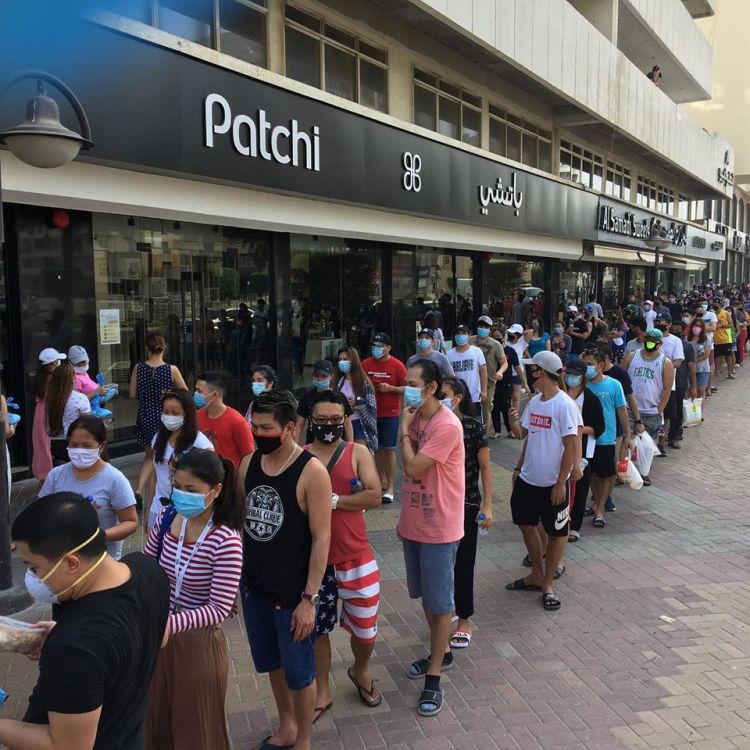
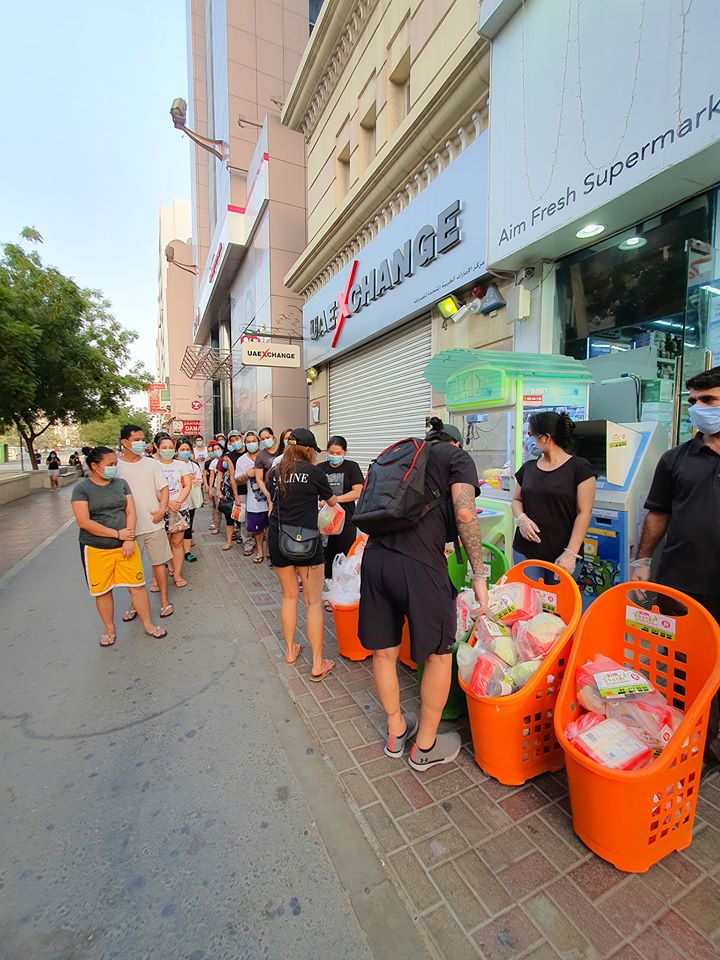
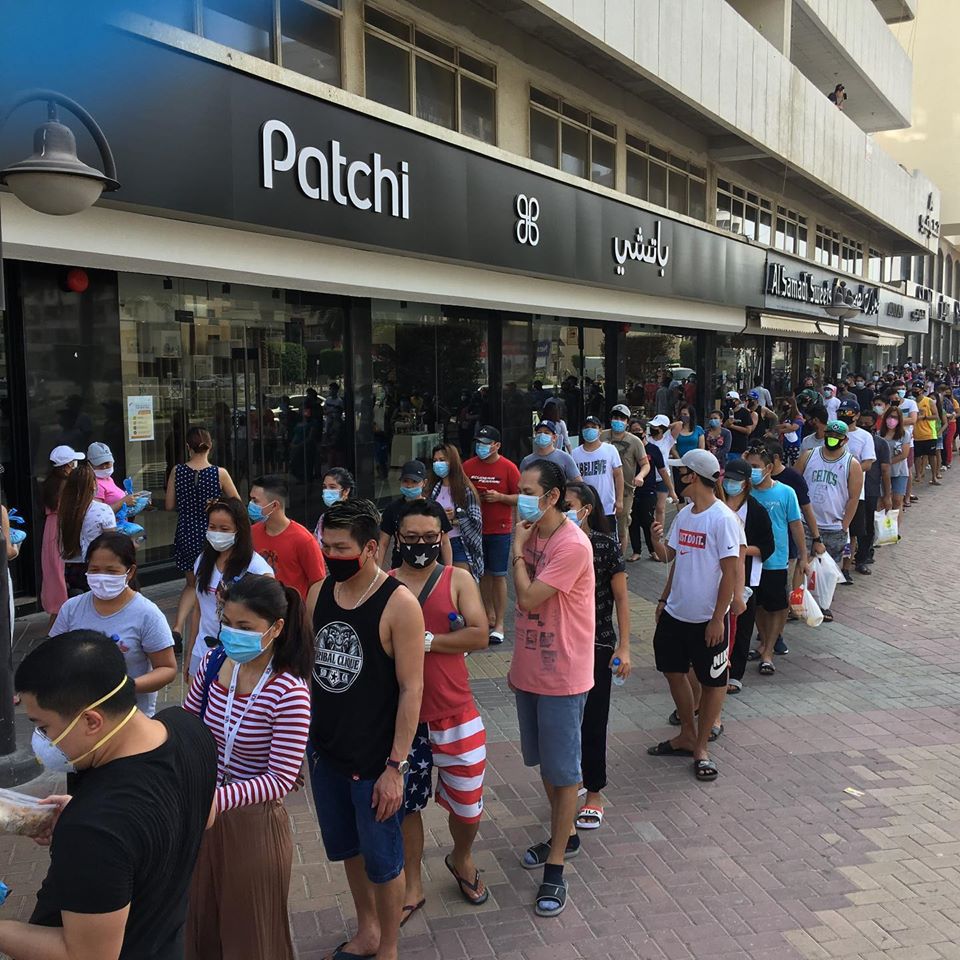
(MAIN PHOTO:Displaced overseas Filipino workers (OFWs) in Dubai queuing in for free hot meals. Photo grab from Feby Cachero Baguisa Dela Peña’s Facebook with permission. She started giving free food a month ago and is now preparing hot meals donated by sponsors.)
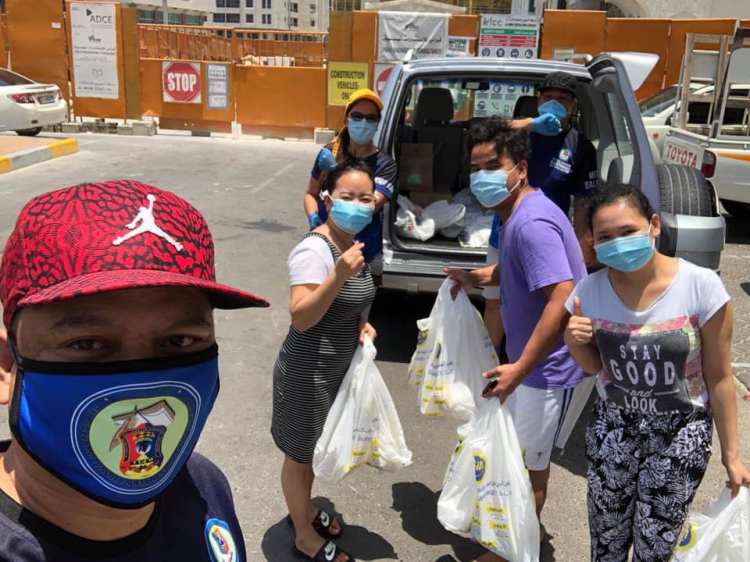
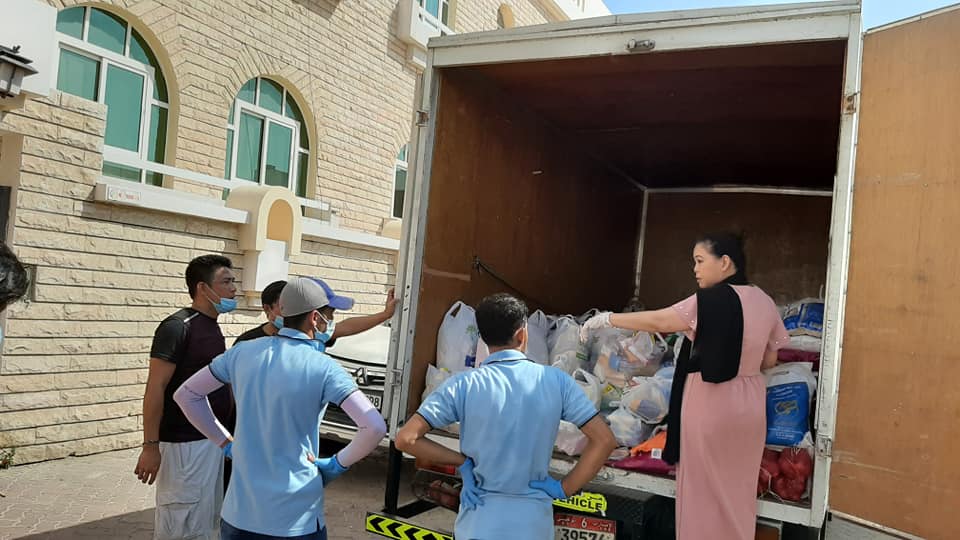
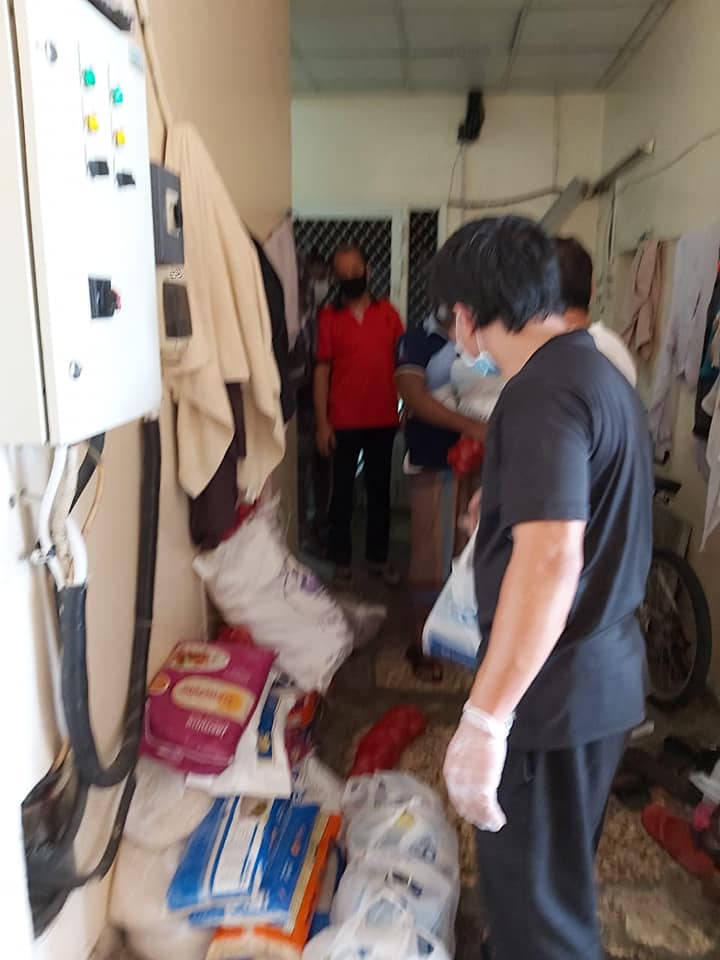
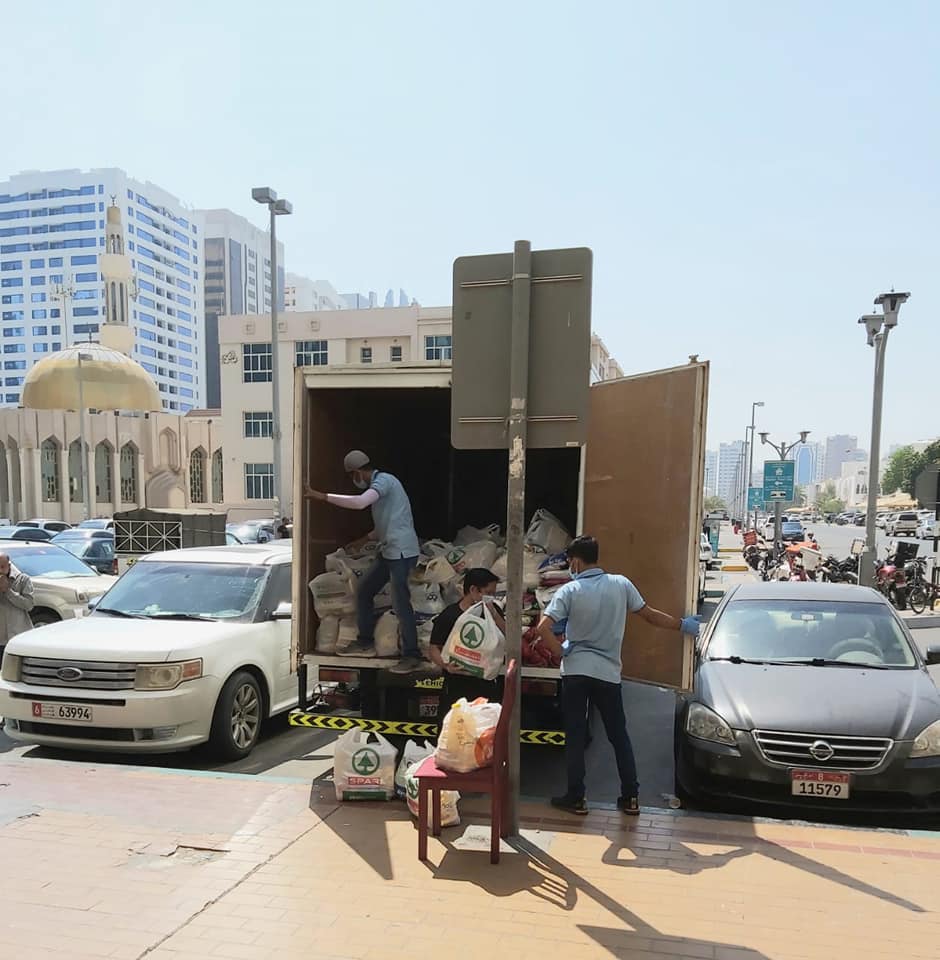
During the height of the government’s sterilization drive, a Filipina community leader sent off a distress call on Facebook about some 177 daily wage earners – mostly Bangladeshis, Nepalis and Pakistanis – on no-work-no-pay and living in one building in Abu Dhabi and in dire need of food.
Mj Maria Lami-in and husband, Junalabdullah Lami-in. “We are only able to help because of the trust and generosity of friends. They always thankfully respond. I also refer to myself as voice and manpower lang,” she said. (Contributed photo)
Mj Maria Lami-in, part of the admin team for a private Abu Dhabi-based FB group of 57,000 members, knew the task was gargantuan and had to be done in an organized manner by first identifying how many occupants were in each room so that appropriate food relief effort can be executed.
The group, Abu Dhabi Q&A, is one of the most directly interactive expat Facebook groups and has the biggest reach in the capital city.
Her post caught the attention of a group co-member, Aamer Al Yafei, a young civic-minded Emirati chemical engineer, who then also did a shout-out to his own group, UAE Relief Initiative.
“When he saw my post, he made a private WhatsApp. Aamer coordinated with me as an individual. I pulled in my OFWGME team for manpower.
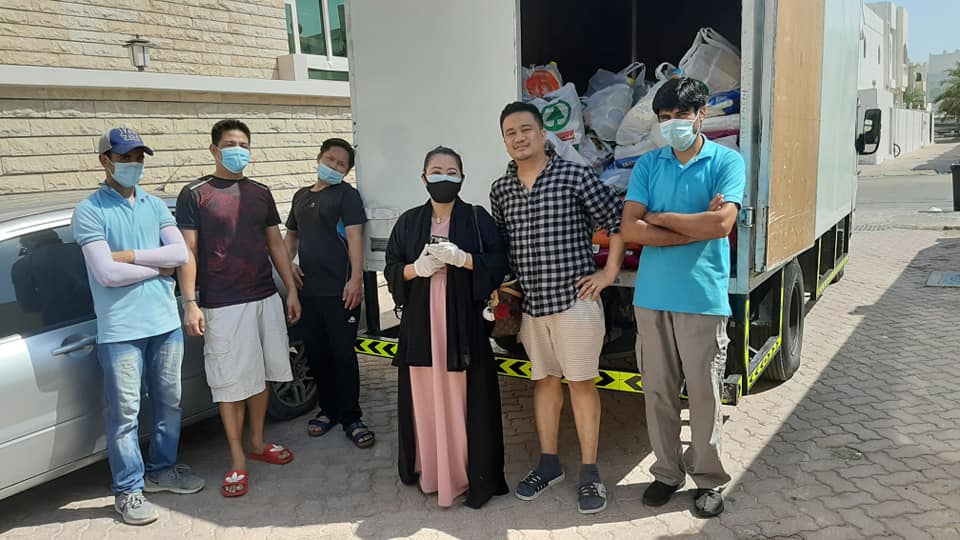
Soon, food relief came pouring in and Lami-in, who also is advisor for the Overseas Filipino Workers Global Movement for Empowerment (OFWGME), mobilized all interested individual for operation. Sheryl Palacios Manalo, also a community volunteer with OFWGME, and popularly known as Inday Sheryl, likewise joined in the collective efforts.
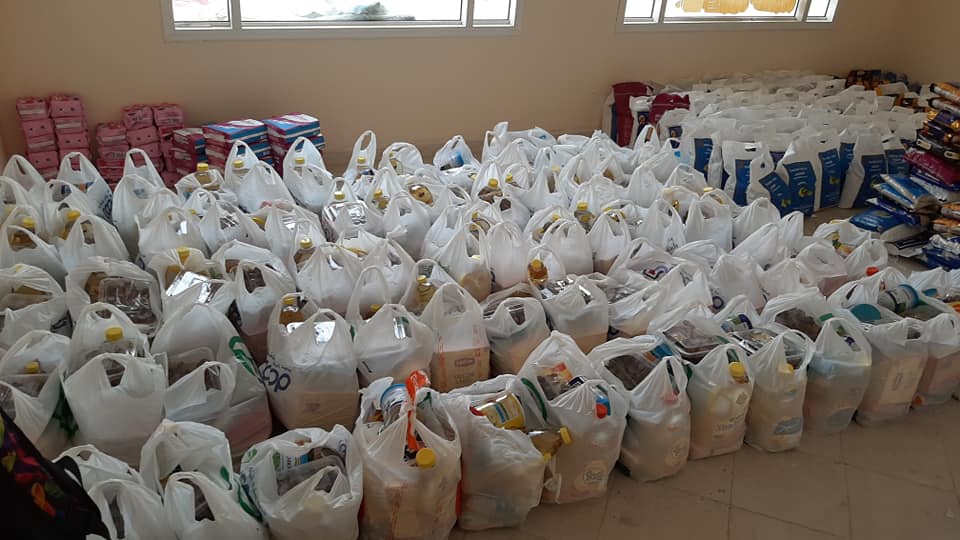
“All manpower activities, sorting and coordinating was from my side with help sa manpower team nating OFWGME members. Sa kanila, willingness and genrosity pag sagot sa need ng bulk food within 3 or 4 days,” Lami-in said.
She said the distressed workers have been staying in their rooms for weeks with no work and dwindling to zero income and thus no food. The building owner, she added, was generous to understand their rental needs but food and hunger was another matter. There were about 18 flats with affected occupants identified in the building which was along Electra Street















 The Daily Bread