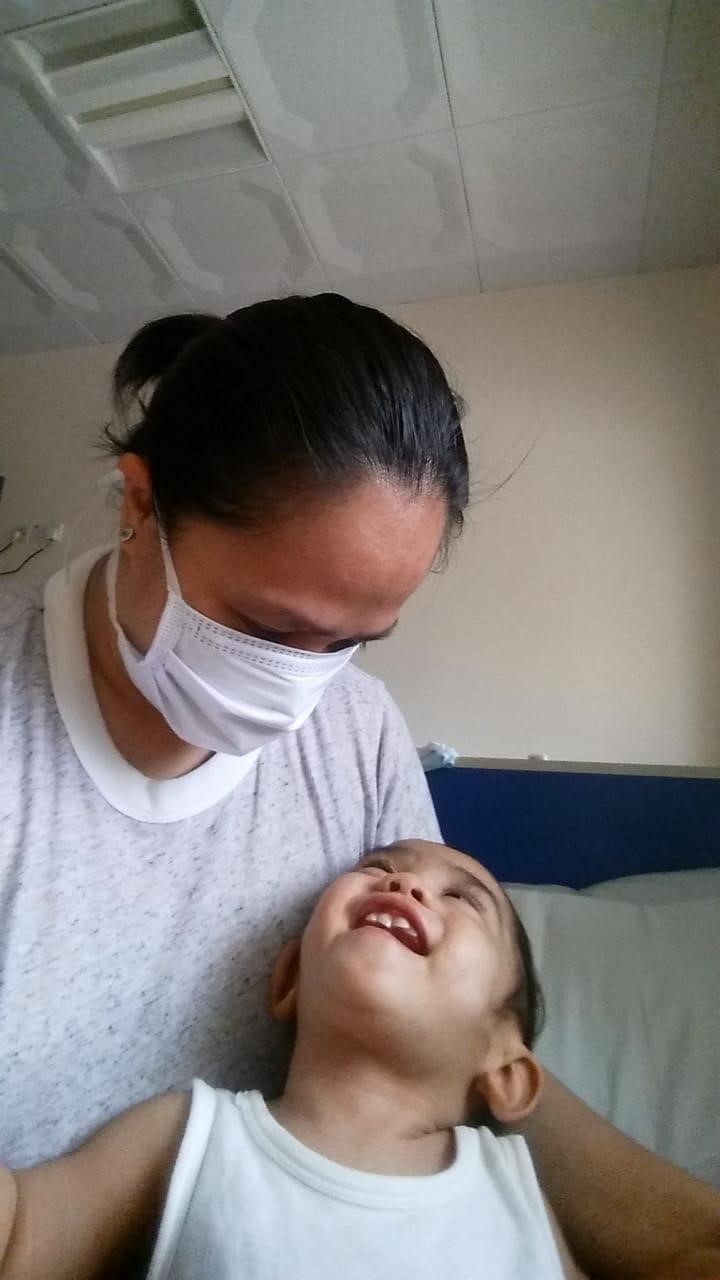
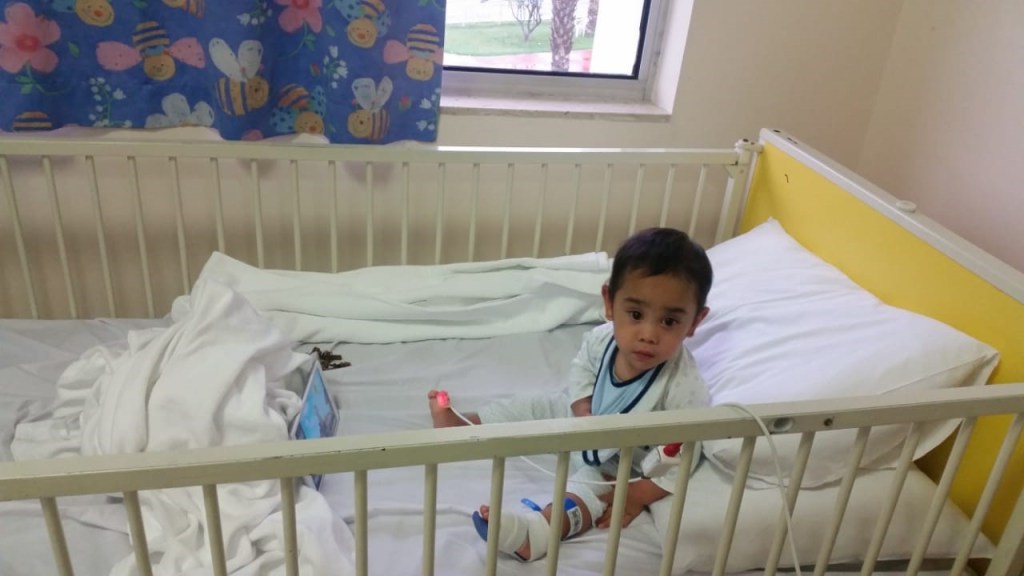
With COVID-19 recoveries in the UAE nearing the 3,000-mark, the Philippine Embassy announced that a year-and-six-month old boy, born three months shy of the due date, has by far been the youngest Filipino survivor.
Baby Zaine tested negative for the infection, three weeks after being confirmed to be afflicted with the coronavirus, the embassy said.
“Mom and baby are now resting at home after 1 week in a hospital and 2 weeks in a quarantine facility,” Ambassador Hjayceelyn M. Quintana, head of the Philippine mission to the UAE, told Rappler.
She expressed happiness that the baby has tested negative for infection, which came 3 weeks after both he and his mother were found to be COVID-positive and started treatment.
Baby Zaine (Supplied photo)
Zaine’s mother, whose name was withheld, experienced very mild symptoms during isolation while Zaine did not exhibit any symptoms at all but tested positive 7 times, according to the Philippine Embassy.
“I have known Zaine since he was born 3 months pre-mature in October 2018,” said the ambassador. She said she has been personally praying for Zaine since.
“I thank God for giving Zaine another miracle,” said Quintana.
“All Filipinos in the UAE, including us at the Embassy, feel and suffer the effects of COVID-19. We rejoice in the recovery of Zaine and join family members of other Filipino COVID patients in UAE in celebrating the recuperation of their affected loved ones. At the same time, we join the families in mourning the loss of those Filipinos in UAE who succumbed to the virus, “ the ambassador added.
She also advised Filipinos in the UAE to continue being cautious as mobility restrictions have starting to be eased.
“Now is the time for continued caution and not for complacency. I therefore urge all Filipinos in the UAE to remain vigilant in exercising COVID-19 precautions such as hand-washing, wearing of facial masks, social distancing, and avoiding going outside one’s home unnecessarily,” she said.
The UAE yesterday, May 4, announced that an additional 203 patients have recovered from COVID-19 after receiving necessary medical care, raising the total number of recoveries to 2,966.
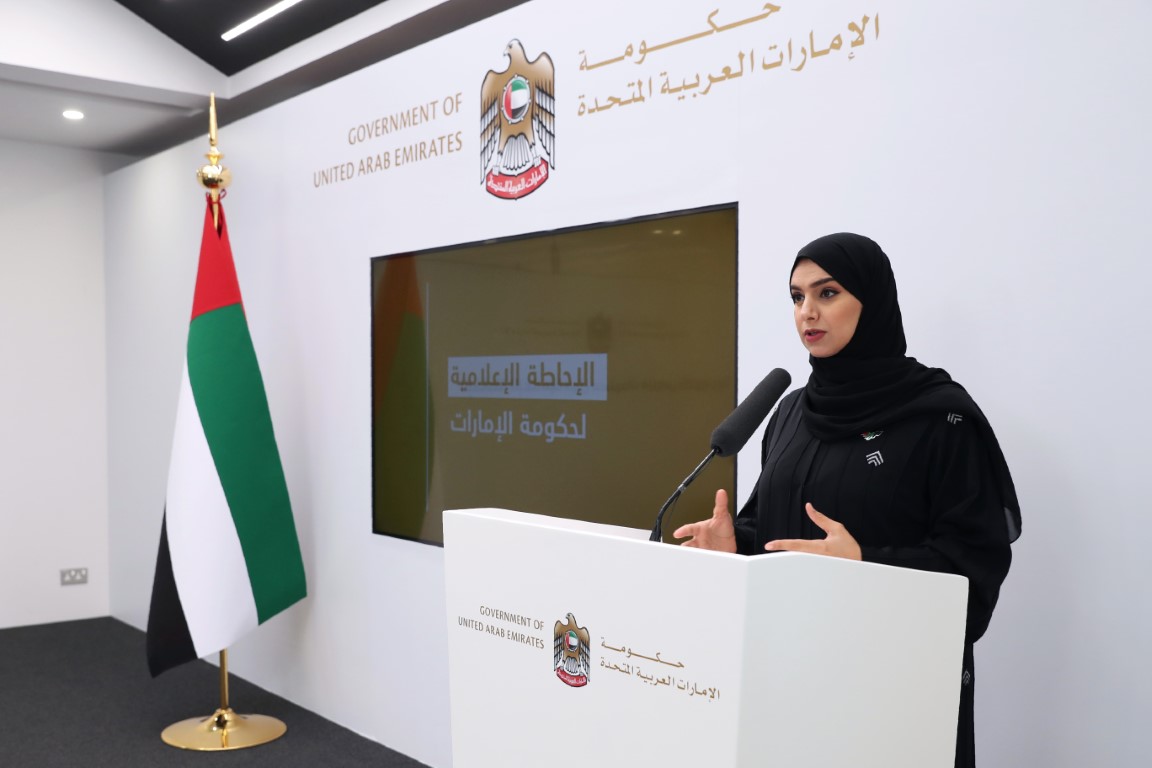
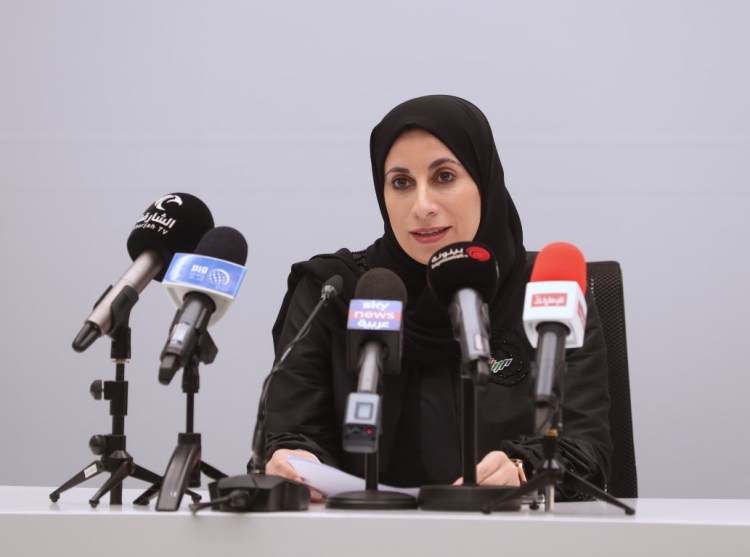
Dr. Amna Al Dahak Al Shamsi, official spokesperson also said at a regular media briefing that an additional 18,698 tests have been conducted across the country, which led to the confirmation of 567 new cases and bringing the total number of COVID-19 cases at 14,730, including recoveries and deaths.
Dr. Al Shamsi said COVID-19 fatalities have so far reached 137 since end-January when coronavirus infections were first confirmed in the UAE.
ABU DHABI — The UAE government announced on Saturday, May 2, that 121 new patients have fully recovered from COVID-19 after receiving the necessary medical care, bringing the total number of recoveries in the country to 2,664.
The announcement was made during a regular media briefing held in Abu Dhabi, wherein Dr. Amna Al Dahak Al Shamsi, the official spokesperson for the UAE government, Fatima Alkaabi, Head Hematology& Oncology at Sheikh Khalifa Medical City, and Dr. Alawi Al Sheikh, the spokesman for the advanced science sector, gave an update on the coronavirus-related developments and measures taken to mitigate its impact.
Al Shamsi said that over 36,266 additional COVID-19 tests have been conducted among UAE citizens and residents over the past few days in line with the Ministry of Health and Prevention’s plans to intensify virus screening in order to contain the spread of COVID-19.
“The accelerated investigative measures resulted in the detection of 561 new coronavirus cases among various nationalities, all of whom are in a stable condition and receiving the necessary care, taking to 13,599 the total number of infections in the country,” she added.
“Thanks to the efforts of all those working at the country’s healthcare sector, thousands of tests are being conducted on a daily basis,” she said, noting that the past two weeks saw an average of 29,000 screenings daily.
Al Shamsi announced the death of eight patients from COVID-19, taking the total number of deaths to 119, expressing her sincere condolences to the families of the deceased and wished a speedy recovery to all patients. (WAM)
The scheduled repatriation of over 50 Filipinos from Dubai today and on May 6 has been postponed following a decision by the National Task Force Against COVID-19 to temporarily suspend all inbound international flights at Ninoy Aquino International Airport (NAIA) due to overcrowding of overseas Filipino workers (OFWs) arriving at a daily rate of 2,000 and needing to be quarantined.
The suspension took effect today, May 3, 2009 and will remain so till May 9, 2020, according to the Department of Transportation (DOTr), citing a decision to this effect by the National Task Force Against COVID-19.
“Currently, the government has already accommodated around 20,000 repatriates who are quarantined in Metro Manila, with an arrival rate of 2,000 per day,” DOTr said in a statement, a copy of which was shared by Consul General Paul Raymund Cortes to media.
“This measure to temporarily suspend international passenger arrivals will enable the government to decongest the processing of this number to a more manageable level, given the need to observe strict health protocols, and the fact that existing quarantine facilities are at full capacity,” the statement added.
DOTr further said that the move is deemed necessary to ensure that the Philippines does not experience a second wave of Covid-19 pandemic due to the increasing number of international passenger arrivals.
“It should be noted that most of our repatriated citizens are coming from countries which experienced significant Covid-19 outbreak,” DOTr said.
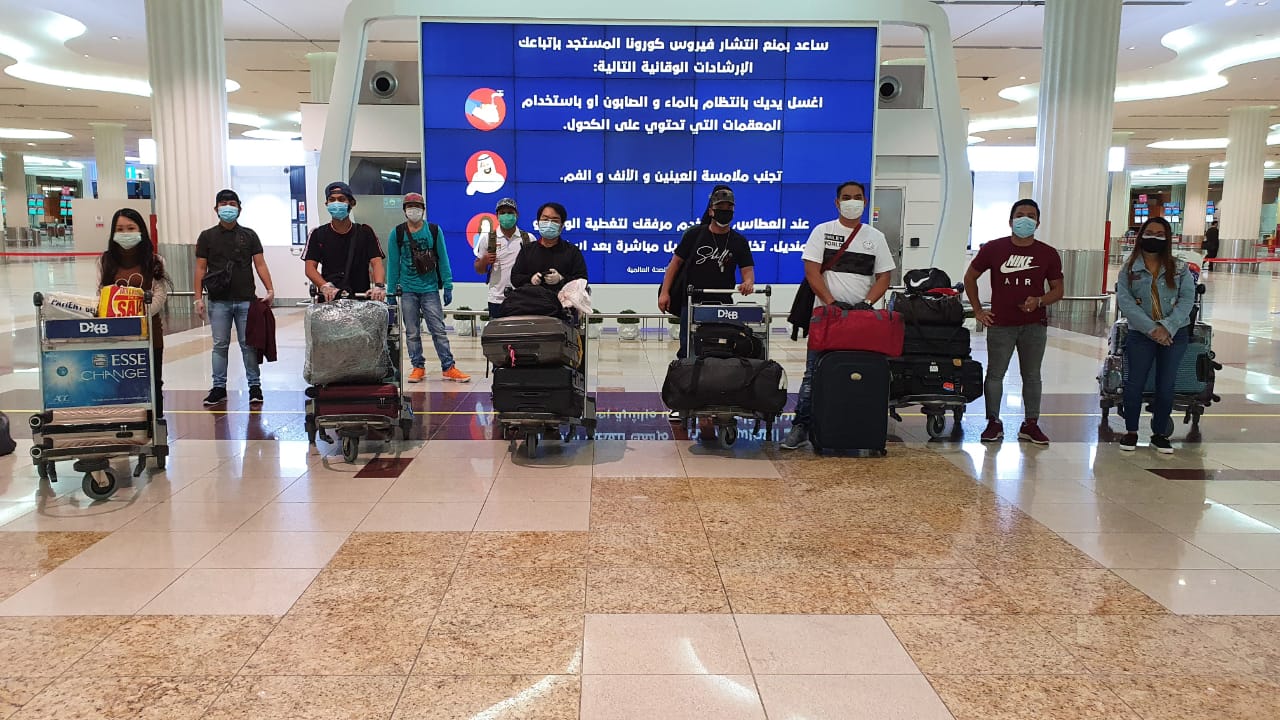
The Philippine diplomatic post in the UAE has just recently started repatriating Filipinos staying in the country on visit visas with the first batch comprising of 13 people having left Dubai International Airport in the morning of April 28, followed by a second batch that left on April 30.
Two other batches of over 50 visit visa holders were supposed to fly today and on May 6, according to Cortes.
He said they will rebook the flights while at the same time continue accepting repatriation requests but in consideration of possible more NAIA flight suspensions in the future.
Most of those going home were either resident visa holders on unpaid leave and being sent home by employers to return when things have normalized; those who have been terminated; or those on visit visa.
Ma April Chentes, who works at a high-end shop for tourists in Dubai that has temporarily closed, has been on unpaid leave since March 24. She said she had an April 1 flight booked but was cancelled after the airport was closed.
She rebooked for May 1 but it was again cancelled, she said. Latest booking was for May 6, which falls under the NAIA suspension period.
Chentes said she has spent most of her emergency fund and savings during the period covering her unpaid leave. She and her house mates, most of whom have been on unpaid leave or jobless, have been surviving partly on dole-outs from OFW groups doing food relief support projects.
“Lahat na po ng naitabi ay naubos na sa pambayad ng bahay, bills… etc. Wala na nga pong pambayad ngayong May,” she told Rappler.
Chentes said she is on unpaid leave till June 30. The company that hired her has started opening some of its shops. Problem is, she said, she is not sure whether they’d be paid on time once they return for work.
“Hindi po namin alam kung papasahurin kami kasi nakapirma kami hanggang June 30 na unpaid,” Chentes said.
“Or, kung meron man na sasahurin, ay kailan? Kasi yung January at February namin na sweldo ay 15th of February na namin nakuha. March naman po ay kulang din sinahod namin,” Chentes said.
Marlon Jimenea, the nurse who this week died of COVID-19, had not been well but tested negative for influenza A and B a few days before he was admitted to a Sharjah hospital’s Emergency Room and soon after transferred to its Intensive Care Unit where he was intubated that evening. He would be staying at the ICU for the next 21 days, going through six cardiac arrests – three of which happened in just a day – before finally passing on.
This according to the 44-year-old ICU nurse’s wife, Merry Janet Jimenea, 40 and a health care assistant, who told Rappler in an exclusive interview that her husband had a check up at University Hospital Sharjah (UHS) on April 2, a Thursday.
“Nagka-coughing na sya. Nagpa-check-up sya. The blood test was done and flu swab was negative so he was sent back home and given anti-biotic,” Merry Janet said.
“Sabi nya sa akin, i-proceed daw for COVID test kung mag-positive,” she added, referring to Marlon’s advice.
Merry Janet and their daughter, six-year-old Marianne Jane “Queenie” Jimenea, were quarantined after Marlon was admitted at UHS. The two tested negative for COVID-19.
“Hindi ko pa rin nararamdaman na wala na siya,” said Merry Janet. “Kau-kausap ko pa rin sya dito sa bahay. Wala na kaming magagawa, We didn’t expect this to happen,” she added, voice quivering on the phone, apparently holding tears back.
“Feeling ng anak namin hindi ko sya love kasi daddy nya lagi pinagdarasal ko mula nang na-confine sya until now. Hirap i-explain sa bata.
“Nakakaluwag naman na nakakausap ko saya kahit sa kusina. Alam ko nandito lang din sya. Magaan ang buhay pag katuwang mo sya. Masakit, kasi, sya ang nagma-manage at gabay mo sa buhay. Tapos biglang mawala. Kaya minsan parang di ko na alam ang gagawin. Mag-isa na ako…iniwan na nya,” Merry Janet said.
He was fine
Merry Janet said Marlon didn’t show signs of breaking down which was why, she said, they took it lightly.
“Malakas naman sya. Kumakain. Naliligo. Nag-a-anti-biotic. No throat pain. May ubo-ubo lang,”Merry Janet said.
“Feeling nya kaya naman nya. We were not that bothered. The fever subsided, May coughing na dry at matigas-tigas,” she added.
She noted that Marlon started having a bloated tummy.
Went dizzy
Saturday, April 4 came and Marlon started to deteriorate, recalls Merry Janet.
“He had no appetite. Hindi nakakalunok. But parang wala lang. We were not expecting it to be COVID. He handles patients so he knew,” said Merry Janet.
Merry Janet, who was on duty that day, said their daughter’s nanny, told her Marlon had a bout of dizziness, which would later on turn out to be caused a declining oxygen level in the body.
“Nahilo daw nang bumaba to buy milk. I still didn’t think it was that serious,” she said.
Merry Janet said she talked to Marlon in the early morning of the next day, Sunday, April 5.
“Sabi ko, ‘Dad, parang hindi na maganda ‘to. Baka gusto mong ihatid na kita sa ospital. Kaya mo pa ba?’” she shared.
Admitted
Merry Janet said her husband managed to book an appointment at UHS that day for his bloating.
“Three in the afternoon, hindi pa rin naka-uwi si Marlon. Hinahanap na sya ng anak namin,” she said, adding that she was on duty at work that day at another hospital.
By 4:30 pm, Merry Janet said, Marlon sent her a whatsapp message: “Tinanong nya kung anong oras ako makaka-uwi. Hindi naman nya sinabing ia-admit na sya. Sabi lang nya, ‘Ga, pakihanda ng yung mga gamit ko,’” referring to personal effects like shaver and so on.
She said Marlon would have asked her to bring his things over at the hospital but thought against it over worries that she could be caught in the curfew.
“I didn’t know he was a suspected COVID case. Kung alam ko lang, eh di sana lumipad na ako,” Merry Janet said, adding that she was later informed Marlon’s “oxygen saturation” level was continuously going down. Low levels of oxygen in the body is among early warning signs of COVID-19, doctors said.
That Sunday morning would be the last time the couple was together.
Marlon was admitted at the ER in the afternoon then was moved to ICU that evening where he was intubated, according to Merry Janet.
“Hindi na kami nakapag-usap mula nang umalis sya papuntang ospital,” Merry Janet said.
She said doctors told her Marlon had six episodes of cardiac arrest. “In one day, nag-cardiac arrest sya ng three times,” she said.
Merry Janet, as of press time, is doing the paperwork for the cremation of her husband’s remains. She said she plans to bring it home in the Philippines.
Shocked
Meantime, Misyl Jovero, Marlon’s colleague at UHS who looked after him during his confinement at ICU said there were “shocked.”
Misyl Jovero with Marlon Jimenea
“All the while we thought that he went to the Out-Patient Department because of abdominal bloating. Then kinakausap ko din sya sa phone nung nilapat na sya sa ER, ok naman po sya. Tapos nalaman namin sa doctor na for intubation po pala sya. So, umiyak na po ako kasi kuya is kuya, not only a colleague but we are all family,” Jovero said.
Going on duty with him as ward was, Jovero said, “physically, emotionally and mentally draining.”
“Physically because it is very hot and uncomfortable po to wear the PPE every time we go inside his room at almost di ka mkahinga sa N95 mask then sa dami pa po ng procedures which will make you stay inside for long hours because our doctor was doing everything without hesitation to save him.
“Emotionally because it hurt me so much po doing nursing care for him like suctioning po for example because I know it’s painful but I need to do it. So mag-iyak ka na lang po ng iyak. And at the end of the shift, you need to update the family also, especially the wife kasi close din po ako sa kanya. Of course, iiyak sya so you wanted to comfort her as much as possible pero may limitations naman kasi sa phone lang sya.
“At mentally po kasi we never expected to see him as an ICU patient, someone from our own unit, hirap po isipin at i-digest,” said Jovero.
Marlon with his colleagues.
Jovero said Marlon did not show signs of respiratory distress when he arrived at the hospital. “COVID is really a traitor,” she said, “Hindi nga nya napansin na he’s oxygen level is low until kinabit sya sa monitor,” Jovero added.
Jovero said Marlon, “an exceptional father and husband who have never hesitated to help,” also didn’t know he was diabetic. “Na-discover lang upon admission,” she said.
“In the end,” Jovero said, “its heartbreaking, seeing him go right before your eyes.”
Marlon has been in the UAE for eight years. He was among the first batches of Filipino nurses at UHS, according to Jovero. He died in the morning of April 26, Sunday. (Supplied photos)
Close to a hundred Filipinos staying in Dubai and its neighboring northern emirates are among first three batches of visit visa holders to be flown home by the Philippine government through a rapid repatriation program initiated a few weeks back.
This was learned from Consul General Paul Raymund Cortes who told reporters that the first batch, a group of 13 visit visa holders left Dubai this morning, Tuesday April 28 on board a commercial Emirates Airlines flight that was expected to land at Terminal 1 of the Ninoy Aquino International Airport (NAIA) at around 10:10pm tonight.
Consul General Paul Raymund Cortes
The second batch, he said, was scheduled to leave on Thursday April 30 while the third, comprised of over 50 visit visa holders will leave on May 3.
“They write us about wanting to return; we interview to make sure walang encumbrances (utang or police case) so kung tourist visa usually wala naman; we determine kung talagang desidido; and if really intending to return we book earliest ticket,” Cortes said, explaining the repatriation process.
He added: “Those who write us about repatriation, if they really want to go home, the earliest would be May 6 Because April 30 and May 3 are already full.”
Cortes further said that “it’s not a matter of who we choose to go home but who is able to be booked first depending on their interest and depending on whether they are cleared to leave the country.”
Cortes said resident visa holders may want to check on their status whether there are cases pending against them – “criminal or civil cases depending on your credit card loans or bank loans or whatever, before you can actually leave.”
“Which is why, he added, “the easiest to bring home would be the tourist visa or the visit visa holders whose visas have not yet expired.
“Otherwise double checking their status or their capacity to be issued and out of clearance will take another set of procedures not just on the part of the Consulate but also on the part of the host government.”
Most Filipinos make use of the UAE government’s open policy of issuing visit visas to enter the country and look for jobs. But current COVID-19 conditions appear to be proving too challenging for them to make it, considering their dwindling financial resources.
The UAE government has announced that the number of COVID-19 tests has broken the one million mark, reaching a total of 1,022,326 screenings as part of the national plan to intensify coronavirus detection, Emirates News Agency (WAM) reported.
Recoveries meantime have been averaging at 100 a day, the government said.
Citing Dr. Abdul Rahman bin Mohammad bin Nasser Al Owais, Minister of Health and Prevention (MoHAP), WAM reported said COVID-19 tests are available nationwide under the directives of the UAE leadership for Emiratis and residents alike at more than 14 mobile drive-through facilities, in addition to screening centers provided for by hospitals and other medical facilities across the country.
The Minister attributed the success in conducting such a large number of tests to the “tireless efforts made 24/7 by dedicated medical teams.”
“The more tests we conduct, the earlier we detect more cases, and the more efficiently we can contain the virus. The more tests we perform, the more proactive we can handle those proven to be in contact with confirmed cases, as well as those who don’t exhibit any symptoms and yet carry the infection,” WAM quoted Dr. Al Owais as saying.
If you are worried about high number of new COVID-19 cases, don’t be.
“It is normal that we detect more cases when we accelerate screening. And herein we would like to reassure the public that this increase in the number of patients is expected and proves that we are on the right path to contain the spread of the virus.”
For her part, Dr. Amna Al Shamsi, spokesperson for the UAE Government, said the number of recoveries has increased to 1,887 after another 127 cases have been fully cured.
“Past weeks saw the recovery of an average of 100 cases daily,” she said, adding that 20 percent of the total infections have recovered. Accelerated screening resulted in the detection of 532 new cases among various nationalities, bringing the total number of infections in the country to 9,813.
She explained that the decision to partially relax restrictions does not mean that the situation is back to normal. Precautionary and preventative measures are still in place, and the public must comply with all measures, including social distancing and the wearing of masks.
“On the occasion of the holy month of Ramadan, the UAE has been keen to partially relax restrictions on movement while ensuring that all people continue to abide by the relevant prevention guidelines and instructions,” Al Shamsi stated.
“I like the adrenaline rush of the ER. But in this time of COVID-19, I’d rather be in the community, keeping the elderly in their homes than risking them to further infections.”
DUBAI: Away from the COVID-19 “battle zones” – hospital emergency rooms and intensive care units – where health care professionals and patients teeter on the verge, are specialized nurses looking after the aging and making sure their vulnerable wards don’t end up in body bags as the ongoing global war against the coronavirus pandemic rages.
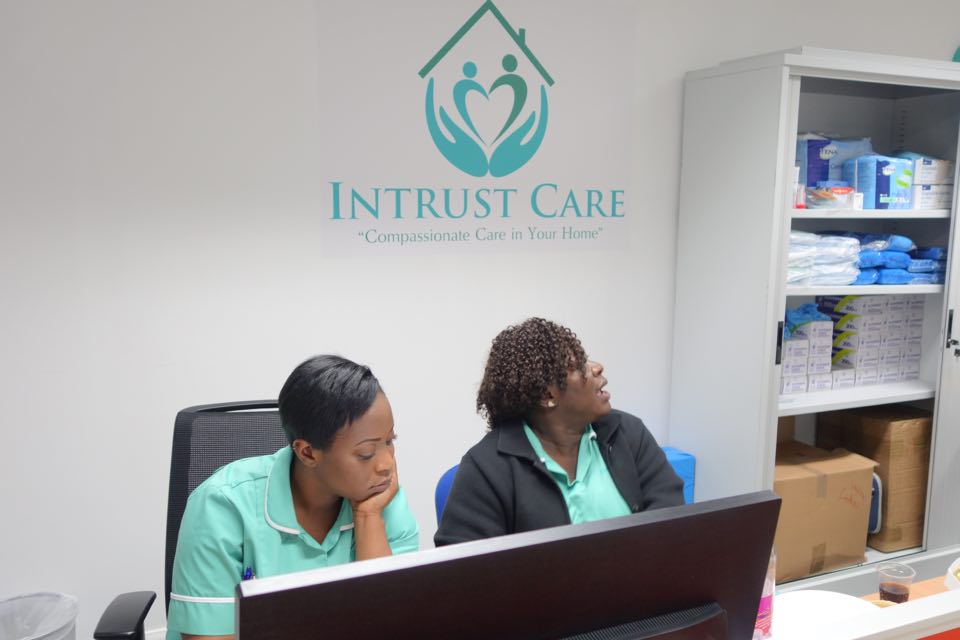
Among them is Maureen Moreno-Akhaine who is operating a home care service for the elderly in the UK. This her story.
Keep them away from hospitals
“I love working in ER,” said Maureen Moreno-Akhaine, who hails from San Pedro, Laguna and has been living with her husband, Humphrey, a college lecturer who also was an ER nurse, in Milton Keynes, a town northwest of London in the United Kingdom, for the past 18 years.
“I like the adrenaline rush and challenges. But in this time of COVID-19, I’d rather be in the community, keeping our clients as much as possible in their homes rather than risking them to further infections and viruses in the hospital,” said Akhaine, who started out as a midwife in the Philippines and now runs her own home health care service, which has been operating for the past 5 years.
“At the moment,” said Akhaine, “the hospitals encourage people to go there only when really necessary.
“Those feeling sick are able to call the 111 emergency number and get advice on what to do; and if they really need to, the hospital sends an ambulance to get them.”
Akhaine, who finished nursing school at University of Bedfordshire in 2009, said she is able to compliment the hospitals’ efforts by teaching her staff the right techniques of infection prevention which in turn helps in minimizing the risk of their patients’ exposure to coronavirus and prevent them from having to be rushed to the hospital.
They also send their clients and their family a letter about a contingency plan for the COVID-19, she said.
“Thankfully, we haven’t had any client who has contracted COVID-19,” said Akhaine, who had worked at Milton Keynes Hospital’s emergency department for four years before becoming a community rapid response nurse where she and fellow staff managed patients with long-term conditions.
“If ever one of our clients shows any symptoms, he or she will be managed by our staff at his or her home unless a ventilator is needed,” said Akhaine, who herself was recently in self-isolation for three weeks after having COVID-19 symptoms.
“It was tiring and draining during the first 4 days due to persistent cough and very itchy throat to a point that I vomited as my body trying to expel mucus that was, unfortunately, not coming out,” she said.
The domiciliary care that Akhaine operates has 29 clients from 18 years old to 75, mostly in the aging demographic group, she said, that her staff regularly visits in their homes. “Most of them have underlying conditions such as diabetes, stroke, chronic obstructive pulmonary disease (COPD) and cancer, among others,” Akhaine said.
A problem they are faced with at times, saidAkhaine is shortage of PPE or cost of PPE having gone up.
“We are supported by our local government and they have been calling us 2 to 3 times a week to inquire about how we are doing or the challenges we have been facing,” she said.
“When we had a shortage of aprons, they provided us with emergency supplies; that is one good thing here: We are well-supported,” she added.
Caring for the vulnerable adults at this time of COVID is challenging, Akhaine said, because the virus is new. “Most clients and families are anxious and afraid that they might catch the virus,” she said.
The UK has extended its lock down, which started on March 23, for another three weeks to run till May 6. The country so far have been 143,460 COVID-19 cases and 19,506 deaths as of press time, according to reports.
(Main picture is that of MaureenMoreno-Akhaine and staff)
Dubai has finally eased its three-week, round-the-clock restrictions on the movement of people, announcing partial re-opening of businesses and the resumption of the metro.
The move sent a glimmer of hope to thousands of overseas Filipino workers (OFWs) and other expatriates, mostly in the hotel, malls as well as food and beverage sectors, who have been in limbo after the companies they worked in temporarily closed shop due to COVID-19.
“Hopefully,” said Consul General Paul Raymund Cortes, “the rebound of the economy will begin.”
“But,” he pointed out, “let us not be complacent with this silent enemy — the virus.”
Ericson Reyes, president the Filipino Social Club, an aggrupation of various Filipino groups in Dubai and the Northern Emirates, said they hail the move.
“The decision made by the authorities are based on statistical data and scientific projections supplied by reliable sources. In a way, it’s an effort to balance human lives and livelihood. That is why movements are somewhat relaxed, yet preventive measures are in place to ensure health and safety,” he said.
Josie Conlu, advisor of the Kalayaan 2020, another organization of Filipinos in Dubai, said it pays to heed the government’s call to proceed with caution.
“People should not be complacent and remain cautious,” she said.
Announcement
The announcement to relax the restrictions was announced Thursday, April 23, by the Supreme Committee of Crisis and Disaster Management (SCCDM) headed by His Highness Sheikh Mansour bin Mohammed bin Rashid Al Maktoum, in line with the decisions of the Ministry of Health and Prevention (MoHAP) and the National Emergency Crisis and Disaster Management Authority (NCEMA).
It takes effect starting today, April 24 – the start of the month-long Ramadan.
Careful assessment
The Dubai Media Office, tasked with disseminating government-related news in cooperation with local government agencies, citing SCCDM, said the move to reduce restrictions on movement in Dubai “follows a careful assessment of the current situation and analysis of reports from various authorities working to combat the pandemic.”
Underlining the emirate’s success in countering the spread of the virus, SCCDM said that stringent measures undertaken over the last three weeks have significantly helped to mitigate the crisis.
It added that the community’s compliance with restrictions on movement reflects its “strong spirit of shared responsibility” which was recently highlighted by HH Sheikh Mohammed bin Rashid Al Maktoum, Vice President and Prime Minister of the UAE and Ruler of Dubai.
As part of the first phase of easing of restrictions, individuals will be able to leave their homes between 6am and 10pm without a permit. The public is required to strictly follow precautionary measures which include maintaining physical distance from others as per guidelines and wearing a face mask. Those who do not wear a mask face a Dh1,000 fine.
Guidelines and salient points:
Public transport (bus & metro), restaurants & cafes (except for buffet and shisha), retail sector (malls, high-street outlets and souqs), wholesale sector and maintenance shops will be allowed to operate under certain conditions.
Family entertainment facilities, cinemas, changing rooms and prayer rooms will not be allowed to operate.
Hotels will be allowed to operate but without opening pools, gyms, sauna and massage parlors.
A maximum of 30% of the workforce of all organizations will be allowed to work from their offices while the rest will be required to work from home.
Exercising outside will be allowed but only within the area of residence. Individuals must follow preventive measures including ensuring two-metre distance from other individuals and wearing face masks.
Considering the advent of Ramadan and the social customs and traditions surrounding the Holy Month, members of the public are permitted to visit first and second degree relatives. Gatherings should be restricted to not more than five people. However, visiting high-risk individuals (individuals above 60 years and those with underlying medical conditions) should be avoided.
It is prohibited to hold gatherings in public or private places.
Shopping Malls
Shopping malls, markets and commercial outlets will be open daily to the public from 12:00 pm to 10:00 pm. Furthermore, restaurants and shops are allowed to operate at a maximum of 30 percent capacity at the shopping malls.
Malls and retail outlets are not allowed to hold entertainment events to avoid congestion and crowding.
There will be no valet parking at malls and restaurants. The first hour of parking in shopping malls will be free.
Only 25% of the parking spaces will be open to reduce overcrowding in malls.
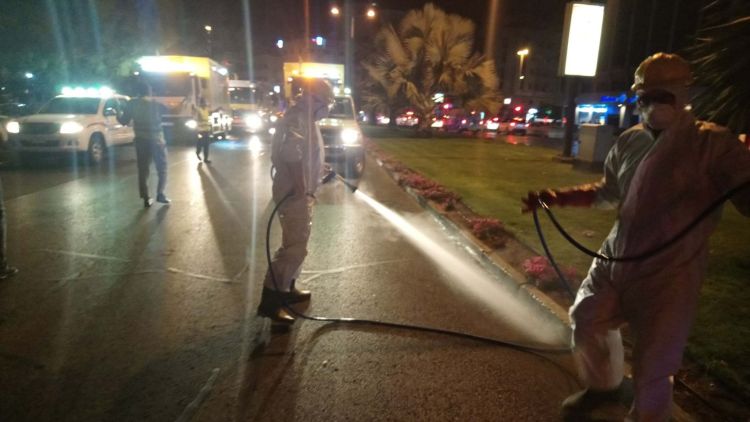
Sterilization operations will continue inside malls. Visitors will be subject to temperature checks at entrances and will be required to wear masks as a condition for entering a mall. Malls are also required to make sterilisers widely available to ensure the highest level of protection for visitors and workers.
All shopping malls will have a medical isolation room for emergency purposes in case someone in the mall is suspected to be infected with the virus.
Individuals above the age of 60 and children between three and 12 years of age will not be allowed to enter malls.
Malls and outlets are encouraged to use smart and electronic payment methods and avoid the use of cash.
Restaurants
Restaurants and cafés are allowed to operate normally but are not permitted to serve shisha and buffet. Dine-in customers are allowed but should occupy only a maximum of 30% of the outlet’s capacity.
A two-metre physical distance should be strictly maintained between individuals. All diners and staff should wear masks.
Only single-use cutlery can be used at restaurants and cafes.
Restaurants are allowed to provide food delivery services between 10.00 pm and 6.00 am
Services offered at salons for males and females will be restricted to hair and nail services. Customers can be received only by prior appointment and all preventive and health measures should be strictly observed.
Public Transport
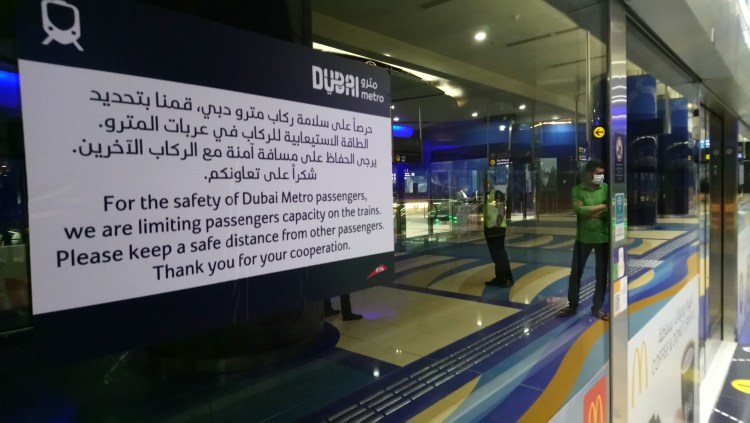
Public transport services, including Dubai metro services, will be resumed from Sunday 26 April. The normal tariff system will be reintroduced. Precautionary measures will continue to be followed and there will be specific guidelines for passengers. • Red and green line metro services will operate between 7.00 am and 11.00 pm. • Preventive measures should be strictly followed by all passengers and staff in metros, taxis and buses and at public transport stations including maintaining physical distance and wearing face masks. • Only two passengers are allowed in one taxi. • Water transport, tram, limousine, and car sharing services will continue to be suspended. Administrative offices for companies and institutions • Employees are allowed to work in offices only if it is absolutely necessary. Their numbers should not exceed 30% of the total workforce. The rest of the workforce can continue working remotely from home. Companies should constantly monitor the number of employees and visitors entering and leaving the workplace every day. • Meetings should be held at the office only if it is absolutely necessary. Attendees should not exceed five people and each person should maintain a two-metre physical distance from others. • Daily sterilization of the workplace is mandatory and employees and visitors should be provided with sanitisers at all times. Everyone is required to wear face masks when at the workplace.
General guidelines • Individuals are prohibited from distributing food except through mass distribution initiatives organised under the supervision of licensed charity organisations and relevant authorities. • Individuals are advised not to share food with family members living in different homes. If food needs to be shared with relatives or friends living in the same area, it should be transported in sealed containers. • Reopening of mosques has been postponed since close proximity between worshippers can pose risks of infection. Group prayers are not authorised to be held in public places and mosques. Group prayers and Taraweeh prayers are permitted at home but the worshippers must be from the same family, residing in the house. • Individuals who step out of their homes for any purpose must wear a face mask and avoid touching any surfaces or their face. They must also use hand sanitisers and wash their hands with soap and water for at least 20 seconds. • Seniors and people with chronic diseases or any illness are not allowed to leave the house and must avoid going to public places to ensure their safety. • Domestic workers are prohibited from meeting anyone outside the home or receiving food from unknown sources. They should be provided with protective gear if they need to interact with people outside the house. They must also be guided on precautionary measures to be followed when receiving deliveries of parcels or goods (including disinfecting the packaging and using gloves).
COVID updates
Meantime, MoHAP has conducted over 29,000 additional COVID-19 tests among citizens and residents, resulting in the detection of 518 new cases among various nationalities, according to the Emirates News Agency (ENA).
The total number of cases in the UAE has now reached 8,756 of which some 1,637 have recovered and 56 have died, ENA said.
MoHAP said the UAE will continue to have increased COVID-19 tests of residents.
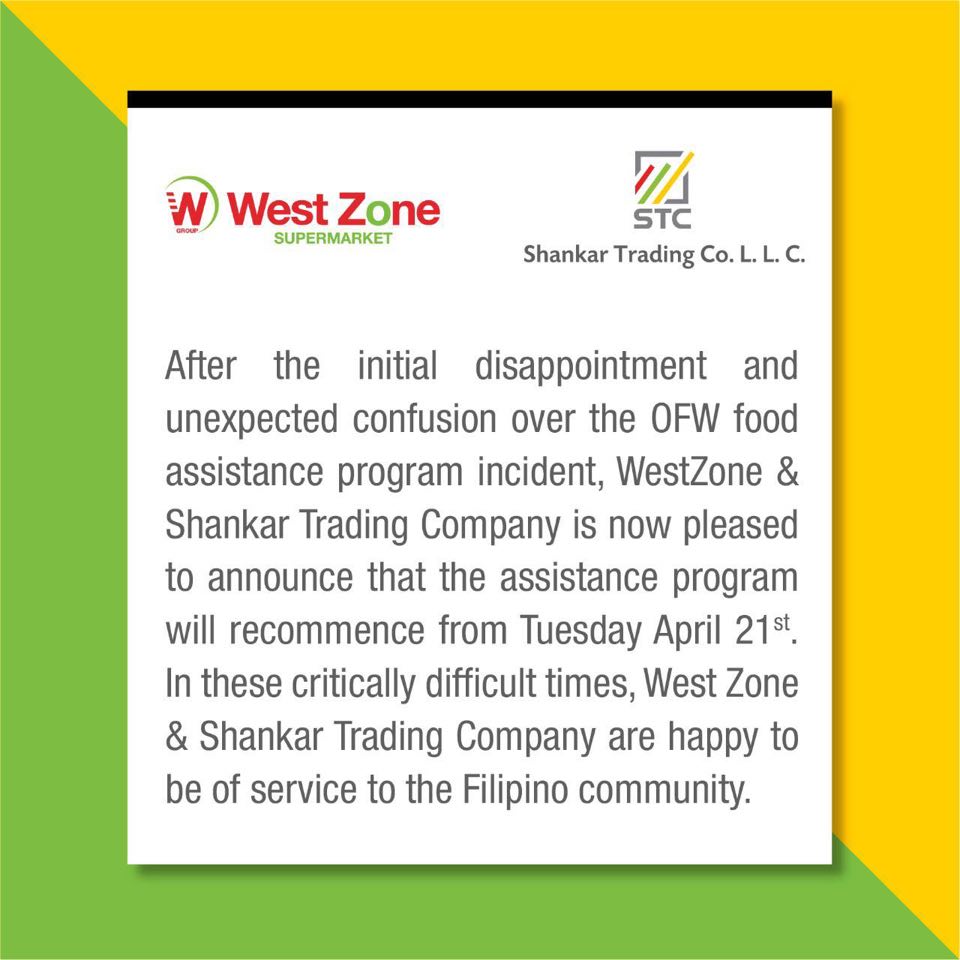
West Zone, a popular go-to place in the community because of its extensive Philippine products, has resumed its food drive with the Overseas Workers Welfare Administration (OWWA) for overseas Filipino workers (OFWs) who have applied for the relief.
In an announcement, West Zone said the food relief re-commenced yesterday, Tuesday, April 21, following the “initial disappointment and unexpected confusion” over the food assistance program.
Consul General Paul Raymund Cortes said the relief program works such that OFWs whose applications for the food relief to OWWA have been approved would be informed that they are qualified and can proceed to West Zone to claim it.
“There have been people who have been sending their applications to the welfare office. Now, based on these applications, the list goes down to the people who will be claiming their grocery at the supermarket,” Cortes said.
Consul General Paul Raymund Cortes
He said the resumption of the relief program is aimed at releasing food packages that were yet to be handed over to the beneficiaries.
“There were people in the list who have not yet been given their relief packages. This (resumption) was supposed to be the second batch,” he said.
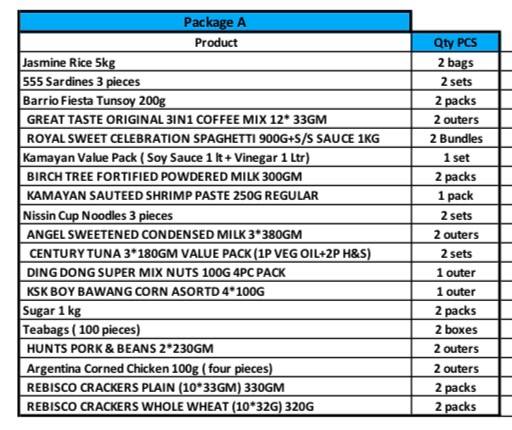
Cortes said OWWA and West Zone selected the packages’ contents.
Raju Gidwani, director of Shankar Trading Co. and the West Zone Group, said the transaction with OWWA was aboveboard. Danilo Flores, the OWWA welfare officer who worked on the relief efforts, said they have a receipt.
Asked to comment over the action taken against him, Flores said: “Okay lang po, sir. Bahagi yan ng buhay.”
“Alam naman ng nasa itaas ang totoo, doon tayo mananagot sa takdang panahon,” he added.
Gidwani said it’s “sad” that Flores was suspended. “It’s sad. He worked hard to set up the entire package and follow up,” Gidwani said.
Snacks
Some quarters in the OFW community have raised, through the comment thread on an earlier report about the issue, that some of the contents were non-essentials.
Flores explained: “Hindi lang sinama ang mga maaring mabasag o mga mababasa para di magka-problema ang buong box. Mga pagkain talaga yun at snacks. Konti lang naman yung (snacks). Hindi naman lahat ganuon. Marami ring delata, may bigas, at noodles para maka-survive kahit paano kung magtagal man ang lockout.”
Also included in the package, according to a list of contents obtained, were three pieces of of canned sardines, three-in-one coffee sachets, a value pack containing one-liter bottles of soy sauce and vinegar, powdered milk, three cup noodles, condensed milk, a kilo of sugar, canned pork and beans, corned chicken and crackers.
Supplied by West Zone
Flores said staff at OWWA will “re-configure” the contents soon as the first batch has been released.
“Magbabago po matapos maubos yung mga naunang order sa kanila (West Zone),” he said.
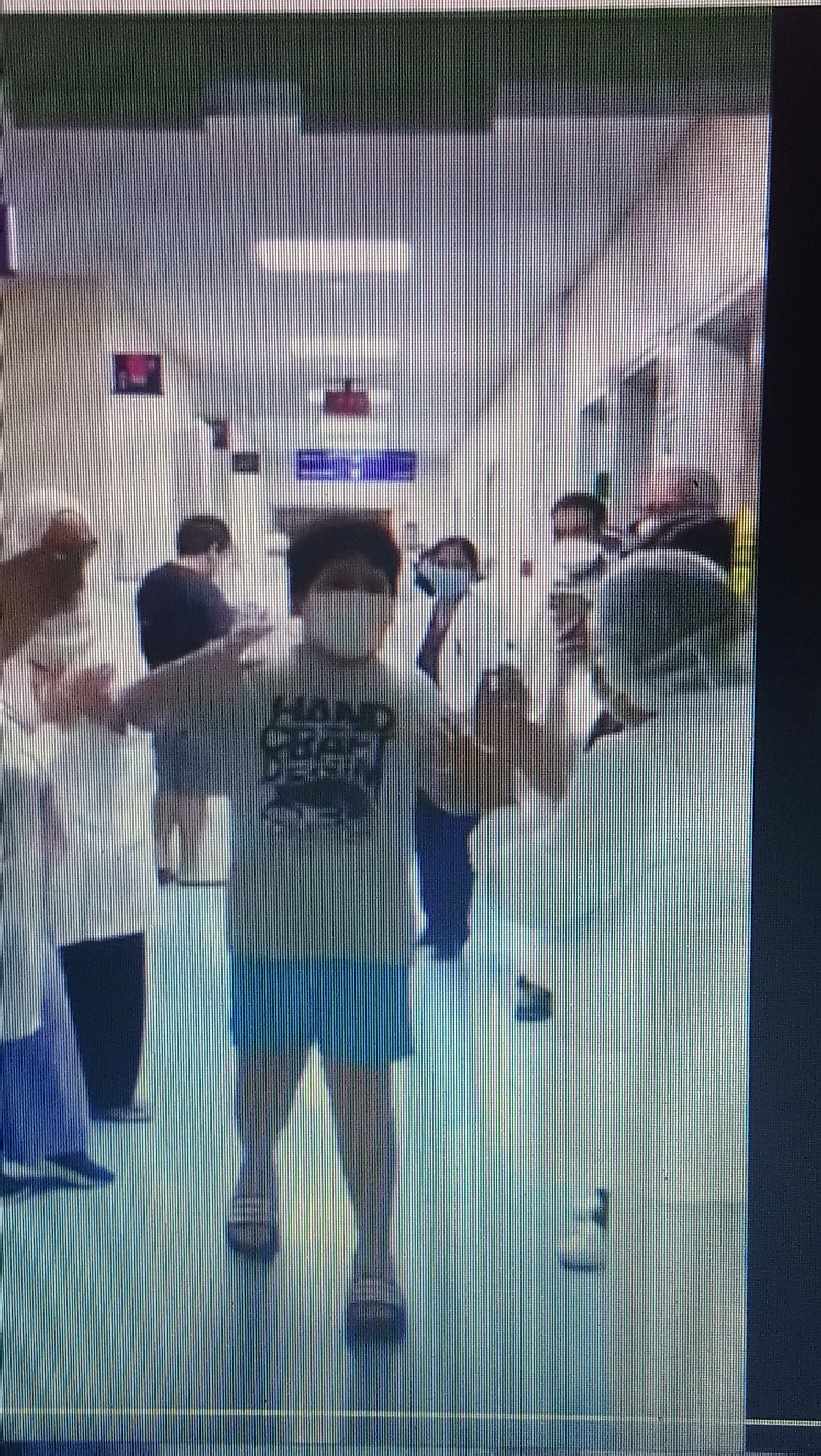
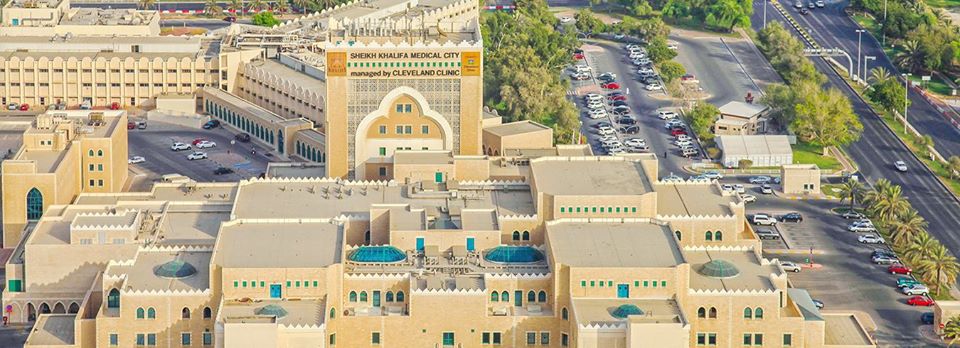
DUBAI: A Filipino boy, who spent his ninth birthday at the Intensive Care Unit of the Sheikh Khalifa Medical City (SKMC) in Abu Dhabi for COVID-19 treatment was discharged yesterday before a cheering crowd of medical staff and well-wishers.
Hervie Emmanuel Magos underwent treatment for almost a month at the hospital where he was admitted on March 22 and was immediately transferred to ICU a day later on March 23.
Fscebook grab
After 19 days in ICU, Magos was moved to the hospital’s General Ward on April 11 and finally discharged on April 21.
Dr. Anwar Gargash, the UAE’s State Minister for Foreign Affairs, broke the inspiring news about Magos’ recovery on his Twitter, where he posted a video of the boy walking by the corridor outside the hospital’s ICU while medical staff applauded.
“The corona’s youngest patient in the Emirates is recovering from intensive care at Khalifa Hospital. The Filipino child celebrates his ninth birthday and celebrates life,” the minister tweeted.
Numbers
Magos is among 1,443 COVID-19 patients, reported by the Ministry of Health and Prevention (MoHAP) to have recuperated from the coronavirus since monitoring started in late January.
On the day of his discharge from the hospital, MoHAP reported having conducted 30,000 additional COVID-19 tests over the past few days, resulting in the detection of 490 new cases.
The Ministry also announced the full recovery of 83 bringing the total to 1,443.
Dr. Farida Al Hosani (WAM)
Speaking at a regular media briefing also yesterday, Dr. Farida Al Hosani, spokesperson for the UAE health sector, likewise said that total number of COVID-19 patients has now reached 7,755 while fatalities were at 46.
The UAE is “close to completing one million examinations within an effective scientific methodology to confront the coronavirus epidemic,” Dr. Gargash meanwhile said.
“The challenge is huge globally and our confidence is absolute in our leadership and in the first line of defense: the while army of doctors, nurses and specialists as well as volunteers,” he said.













 The Daily Bread
